The History Of Sound Review
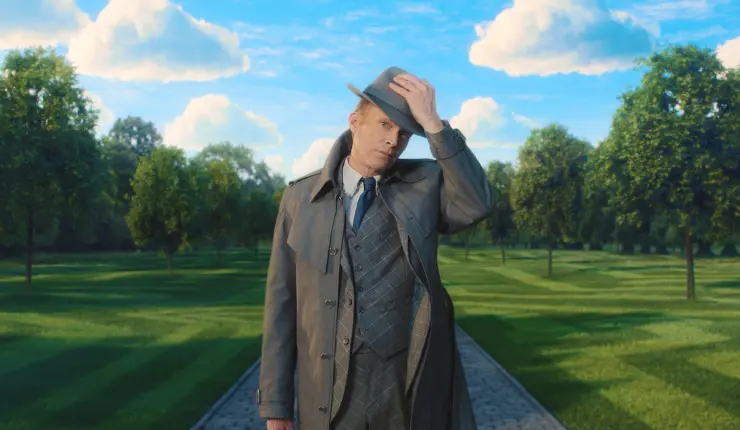
It’s impossible to ignore the parallels between Oliver Hermanus’ The History Of Sound and Brokeback Mountain. Both are based on short stories – Ben Shattuck, the former’s screenwriter, also penned the original story – although, unlike Annie Proulx’s Brokeback, there are moments when it feels stretched beyond its true scope. Once again, we’re in the territory of forbidden love and, even though Shattuck takes a more celebratory approach, it’s still in the shadows, never public and always constrained by the conventions of the day. The result is a surprisingly muted movie.
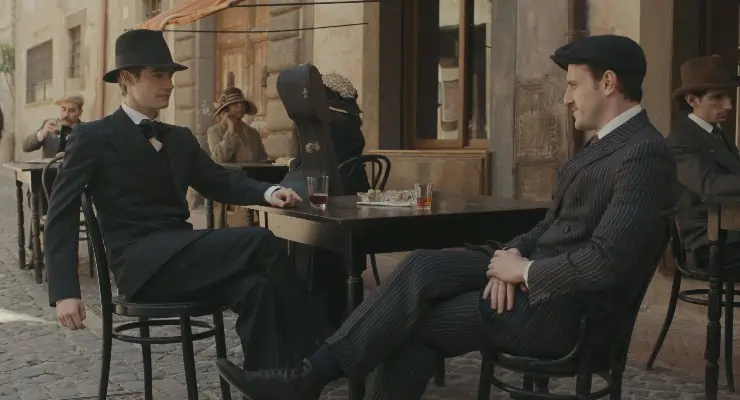
In a love story that spans over decades, country-born and bred Lionel (Paul Mescal) has escaped his farming family thanks to his musical talents and a conservatoire place in Boston. One evening, he meets fellow music student David (Josh O’Connor) and they discover a mutual love of traditional folk songs. With support from their college, they embark on a trip around the country to record songs for posterity, a time when Lionel was, in his own words, “never happier”. They become lovers, but are separated temporarily by WWI when David willingly goes off to fight, an experience he never talks about on his return. He’s a changed man, prone to sudden dark moods, but circumstances push them apart again, Lionel’s regular letters go unanswered, and eventually there’s silence on both sides. It’s only when he goes in search of David some years later that he discovers the only reality of their relationship was the music they preserved on wax cylinders for future generations, and that appears to have been lost.
Hermanus is on familiar territory, once again examining a relationship and emotions which are kept firmly under wraps – think of the tight lipped Bill Nighy in Living (2022). Here, words are kicked into touch when it comes to expressing feelings, and it’s the songs the pair collect on their travels that express the depth of their emotions. Yet the film is strangely disjointed, from the ever-growing silence between the two men to Lionel’s description at the start of the film of his unique ability to envisage music as colours, something that never figures again in the narrative. Their expedition to collect folk songs takes them to an island populated by Irish immigrants and former slaves, all facing eviction. As the police gather nearby, the two leave in a hurry and feel bad about it – yet neither the place nor its people are never mentioned again.
Mescal and O’Connor have both enjoyed substantial attention at this year’s London Film Festival. Aside from The History Of Sound, Mescal has starred in Chloe Zhao’s wonderful Hamnet, while O’Connor was in festival opener Wake Up Dead Man: A Knives Out Story and Kelly Reichardt’s deliciously wry The Mastermind. In truth, while their performances here are good – Mescal is serious and studious, O’Connor exudes a cool, near-untouchable distance – they pale against their work in those other films. The best turns here come from members of the supporting cast, especially Chris Cooper, whose voice provides the narration until he appears in person as the older Lionel. The final portion of the film, which reveals the remaining secret of David’s life, are devoted to Cooper’s heartbreaking discovery and his reaction. It’s a reminder of just what a class act he is.
Visually, The History Of Sound is as beautiful as you would expect from Hermanus, yet he seems just as much bound by convention in creating rural America and Rome as Lionel and David are in their relationship. And, as we discover, the pair both embrace it in similar ways – David marries, Lionel nearly does the same – which means that the love that changed both their lives has been muted. The same, unfortunately, happens to the film.
★★★
This is a repost of our 2025 BFI London Film Festival Review | original review link.
Discover more from
Subscribe to get the latest posts sent to your email.
About the Author