Peaky Blinders: The Immortal Man Review
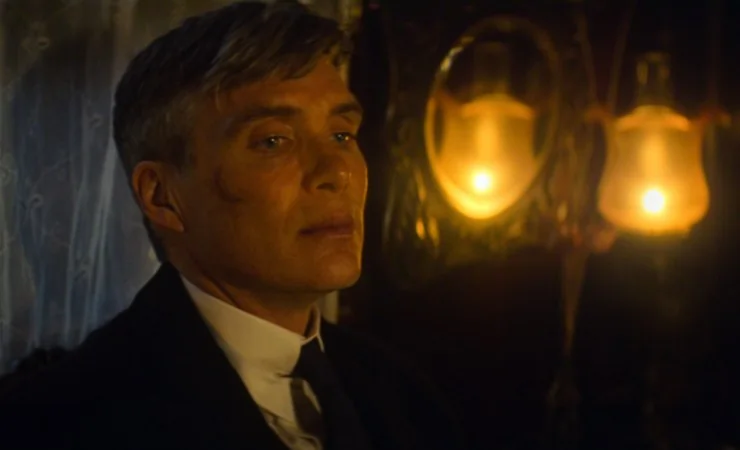
When season six of Peaky Blinders drew to an inevitably dramatic close three years ago, we knew we hadn’t seen the last of Tommy Shelby. A film was very much on the cards, and it was only a matter of time before one of gangland’s most complicated leaders returned. We didn’t have to wait too long, as the intriguingly titled Peaky Blinders: The Immortal Man explodes onto cinema screens this week with all the brutal panache that made it one of TV’s most successful series. Fans will be queuing around the block.
It’s 1940, the West Midlands is under bombardment from the sky, but Tommy Shelby (Cillian Murphy) has withdrawn from any form of public life and is holed up in the countryside, coming to terms with his demons and writing his memoirs. Back in Birmingham, the Peaky Blinders have been left in the unpredictable hands of his son Duke (Barry Keoghan), who sees the war as a money-making opportunity. When Nazi sympathiser Beckett (Tim Roth) approaches the ambitious young gangster with an idea that would make him millions but destroy the British economy, Tommy realises the future of both his country and his empire is on the line and is forced to come out of hiding to protect his legacy.
The stakes are higher than ever. In the show’s final season, Shelby referred to himself as “an ordinary mortal man”, but now we’re presented with “The Immortal Man” because, for all his torment, grief and inability to find personal peace, there is still something indestructible about him. This is no re-run of the story from the small screen. Instead, as the Shelby saga is propelled into World War II, some familiar narratives from the past find resolution while the darkness of the unknown looms ahead. A few familiar faces have gone, but there are new ones, most notably the adult Duke and Kaulo (Rebecca Ferguson), an enigmatic embodiment of Tommy’s Romany heritage. Combined with the powerful images and music from the TV show, it’s a package designed to please its many fans and, when seen on the big screen, packs an even bigger and more atmospheric punch than ever.
Even though it slips too far into melodrama in its final third, Peaky Blinders: The Immortal Man still has some spectacular set pieces. The fight between Shelby and Duke – their first meeting in years – takes place in the gloopiest mud you can imagine and in front of a group of pigs who ironically show next to no interest. Aside from the visual unpleasantness of it, there’s always something profoundly distressing about a fight between father and son, and the sequence captures both the emotional and physical side of their confrontation. The way that Duke captures his father’s iconic, menacing walk later in the film is simply the icing on the cake. It almost goes without saying that Murphy is as brooding and haunted as ever as Tommy, and Roth is enjoyably slippery as the villain of the piece, who presents himself as being eminently reasonable and plausible. But the film is missing something, and it’s the powerful women who were, in so many ways, the equals of the men who appeared to be in charge. The influence of Aunt Polly still lingers but, although Ada (Sophie Rundle) is around for much of the film, there’s a sense that Ferguson is close to being a token woman, and that does both film and actor a disservice.
This, as we know, isn’t the end for the Shelbys. If anything, Peaky Blinders: The Immortal Man is the end of the beginning. With another season in the works, we know they’ll be back on the small screen, and the film prepares the way for a post-war setting with all the challenges that implies. For now, the clan are back with a loud enough bang to make us sit up and take notice – and revisit six seasons of TV all over again. By order, of course.
★★★ 1/2
In cinemas from March 6th and on Netflix from March 20th / Cillian Murphy, Rebecca Ferguson, Tim Roth, Barry Keoghan, Stephen Graham, Sophie Rundle, Packy Lee / Dir: Tom Harper / Netflix / 15
Discover more from
Subscribe to get the latest posts sent to your email.
About the Author