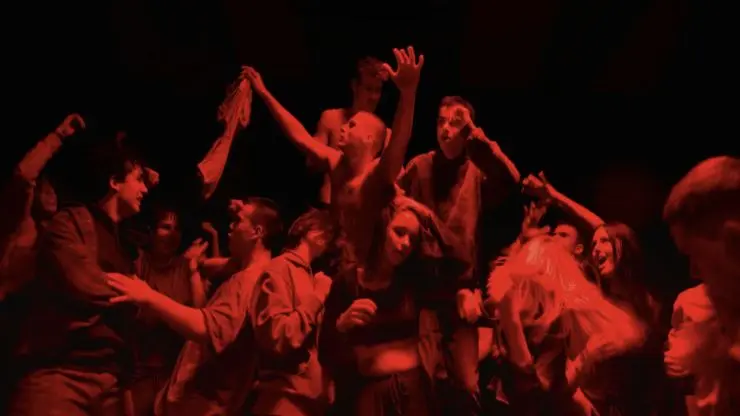
Misper Review (EIFF 2025)
Grief is an emotion we are all destined to encounter. It’s not a matter of if, but when. When will it arrive? Who will I tragically lose, and how will that absence alter the course of my life? Will it strike suddenly, or will it unfold slowly with cruel inevitability? And when it does, how will I manage? No two experiences of grief are alike. A group of people can mourn the same person, yet each will carry that loss differently. Misper explores grief through the mysterious disappearance of Leonard’s co-worker. Blending elements of thriller, horror, and dark comedy, it is a bold debut feature by Harry Sherriff—flawed, but engaging from start to finish.
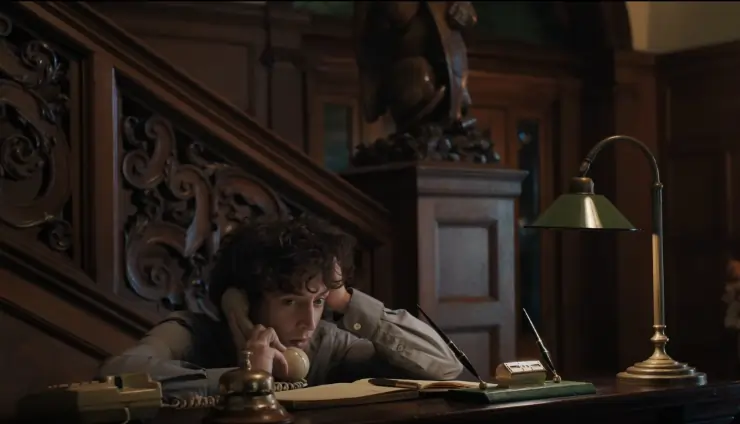
It is an ordinary day for Leonard (played with quiet precision by Samuel Blenkin), who works at the financially struggling Grand Hotel, which also doubles as his home, one of its modest rooms serving as his residence. While on duty, he pauses by a window and spots his colleague Elle (Emily Carey) arriving for work. Leonard harbors a strong affection for her and tries to connect through small, casual conversations during their downtime. One night, he bids her goodnight—unaware it will be the last time he ever sees her. By morning, Elle has vanished. Her sudden disappearance sends ripples through the hotel’s fragile ecosystem, forcing Leonard and the rest of the staff to confront the loss in their own ways.
Misper’s greatest strength lies in its ability to turn the mundane into psychological horror. Elle’s absence profoundly destabilizes Leonard, transforming his world into something eerily reminiscent of The Shining. The once-creepy basement, unsettling but manageable, becomes a site of torment as he envisions Elle imprisoned in the hotel’s underbelly. Leonard even visits her father with a bouquet, intending to offer support on behalf of the staff. Yet this encounter shifts into something haunting, as the grieving father gradually takes on an unsettling, almost sinister presence. Although Leonard barely knew Elle, her disappearance leaves a hollow void in his life—after all, someone he had worked alongside for nearly two years has suddenly ceased to exist in his world.
Beyond Leonard, the film offers glimpses into how the other staff members process Elle’s disappearance, each in their own way. Pam (Christine Bottomley) is consumed by guilt, replaying the moment she failed to ask Elle if she needed a lift. Vivian (Rosalind Adler), on the other hand, clings to the comforting belief that Elle is simply on holiday, using fragile optimism to shield herself from harsher truths. These moments highlight how loss, while shared, is ultimately deeply personal.
Where Misper begins to falter is in its treatment of the disappearance as a mystery. The film introduces questions about the letters Elle received, their mysterious sender, and the circumstances of her vanishing—threads it deliberately leaves unresolved. While this ambiguity is intentional, the film invests such narrative weight in the mystery that viewers are compelled to expect answers. This choice, however, mirrors society’s own obsession with such cases, where the need for closure often outweighs acceptance of the unknown.
In what can be read as a critique of true-crime culture, Leonard is cornered by a so-called fan, and within a short time, a fictionalized retelling of the case is already in production. In these fleeting moments, Misper highlights how Elle’s disappearance is commodified, her identity reshaped through speculation. People who barely knew her begin projecting stories onto her life, turning her into a vessel for intrigue and a source of simplistic emotional gratification for audiences to consume.
However, when the film leans further into Elle’s disappearance and its supposed connection to the true-crime phenomenon, it stumbles. Because the mystery is deliberately ambiguous, this detour feels less like meaningful exploration and more like narrative padding, offering no compelling reason why this particular case has captured public fascination. The film also experiments with flashes of black humour, but these rarely land—creating moments that provoke second-hand embarrassment rather than genuine comic relief.
Misper is ambitious in scope but scattered in execution. It tries to tackle too much, which dilutes its emotional impact and makes it harder to fully engage with. Its handling of grief is thematically resonant, but its commentary on true-crime culture and the mystery surrounding Elle’s disappearance feels more like decorative subtext than substantive critique. In the end, what could have been a great film settles for being merely admirable.
★★★
Played as part of the 2025 Edinburgh International Film Festival / Samuel Blenkin, Emily Carey, Christine Bottomley, Daniel Ryan, Oliver Ryan / Dir: Harry Sherriff / 15
Discover more from
Subscribe to get the latest posts sent to your email.
About the Author