The Enduring Legacy Of Hammer Horror

Rank Film Distributors
For a studio so resolutely associated with a particular period of British cinema, it’s odd that Hammer Studios suddenly feels relevant again. To coincide with the launch of Hammer Presents, a series that sees the release of meticulously restored British horror classics from Hammer and the studio’s peers, there hasn’t been a better time to assess just what makes these films so influential. Modern horror cinema is often divided into two camps. On one side sit the blockbuster franchises built around jump scares and marketable villains (The Conjuring, Annabelle, Terrifier, etc); on the other, the more allegorical, psychologically driven films associated with studios like A24.
In the UK in particular, there has been a remarkable horror renaissance in recent years. Films such as The Witch, Saint Maud, and Enys Men have made a lasting impression by embracing folk horror, social anxiety, and psychological allegory. These are often discussed as if they were recent innovations, but Hammer was exploring these ideas decades earlier.
When I was growing up, the mere mention of Hammer Horror conjured images of decadence and sensationalism, with films full of lurid bright blood and heaving décolletage. The popular perception was one of campy fun, not to be taken too seriously. Watched with a modern, less prurient mindset, though, we can see the films for what they really are. As Mark Gatiss notes in his excellent documentary series A History Of Horror, “In the early days at least, Hammer played their horror very straight indeed.” That seriousness is perhaps what allows the films to endure. There is an understated wit, certainly, but there is also a maturity to the storytelling that feels strikingly modern.
Beneath the Kensington gore and lavish Technicolor, Hammer’s films were often surprisingly sophisticated. They explored repression, sexuality, class, religious hysteria, social collapse and a Britain struggling to define itself in the aftermath of war. What appeared to be Gothic escapism frequently concealed something more subversive. It’s these qualities that make Hammer feel unexpectedly contemporary.
Part of the studio’s appeal at the time came from its visual confidence. Hammer pioneered the use of colour in a way few horror studios had before, making it an essential part of the storytelling. Filmmakers like cinematographer Jack Asher drenched shots in vibrant colour palettes, in films like The Curse of Frankenstein, Dracula, and The Mummy. Asher used lighting and painted sets to convey different moods, effectively creating a visual language that might not be immediately obvious but which subconsciously registers with the audience. Green lighting would signify supernatural or otherworldly elements, yellow would symbolise deceit, and red would inevitably signify danger. Sets were painstakingly dressed with red details that subtly prepared audiences for the blood that would inevitably follow.
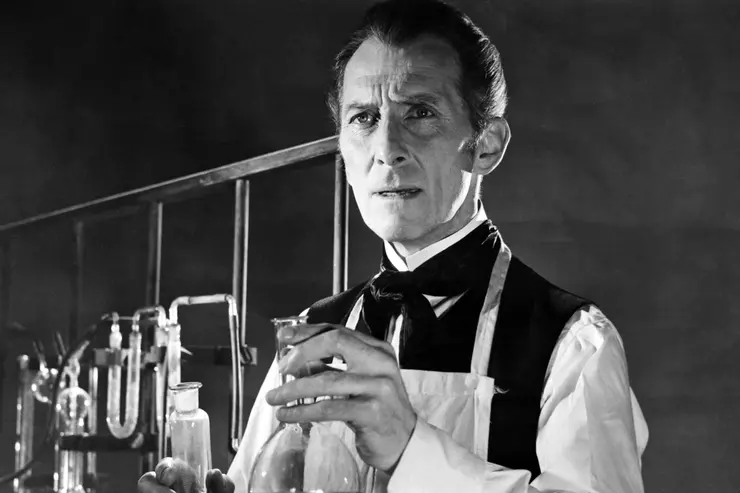
The violence was shocking for its time, and even today, certain scenes are difficult to watch, not least because of the vivid crimson blood that explodes across the screen. The films were equally revolutionary in their treatment of sexuality. Bela Lugosi’s Dracula may have arrived first, but Christopher Lee’s interpretation was far more overtly suggestive, turning vampirism into something charged with desire as well as fear.
What was once seen as a lack of subtlety is now seen for what it is – an economy of story, an understated wit, and a sense of vitality that means today they stand up a lot better than the creaky older versions. If the Universal horror classics felt like gothic fairy tales, Hammer brought a much more modern approach; key to this were directors like Roy Ward Baker, John Gilling, and especially Terence Fisher. Fisher was the most ubiquitous director of Hammer horror films, directing 29 horror films for the studio, most notably their versions of Dracula, Frankenstein, and The Mummy, which would go on to define the studio.
Tod Browning’s Dracula remains important largely because of Lugosi’s iconic performance, but it is undeniably arch and theatrical, owing much to the stage play on which it was based. Fisher’s Dracula, by contrast, is full of life, thanks to Jimmy Sangster’s playful script and the incredibly energetic performances from Christopher Lee and Peter Cushing, who literally throw themselves into the action scenes. Fisher and Sangster took many liberties with the story, but it’s such an elegant adaptation that, even having read the book, it allows for genuine surprises along the way. It feels much more in common with Mark Gatiss’ own BBC adaptation.
This willingness to reinvent familiar stories was one of Hammer’s greatest strengths. Dracula cuts much of the extraneous elements, discarding the novel’s lengthy setup in favour of a leaner, more streamlined narrative. The Curse of Frankenstein similarly reworks Mary Shelley’s story, partly out of necessity, since Hammer was told they could not reproduce the visual elements Universal had made famous – Anthony Hinds, a producer for the studio, said that Universal representatives were “waiting with a writ” in case they used any of the studio’s own additions to the story. Gone are the neck bolts, flat head, and ill-fitting suit. In their place is Christopher Lee’s cadaverous patchwork creature, designed by Phil Leakey. He’s a monstrous-looking creature, but as Jonathan Rigby describes him in his book English Gothic, “Lee’s exquisitely observed performance, as a kind of pitiful, brain-damaged child struggling to co-ordinate as well as communicate, is full of subtle and suggestive details.”
More radically still, the film features a Baron Frankenstein who is inarguably the true monster of the story. There hasn’t been an adaptation since that has touched on the character’s villainous side half as well as Cushing’s callous, almost psychopathic version. Such changes were controversial at the time, but they demonstrate an understanding of adaptation that feels remarkably contemporary. Revered filmmakers such as Martin Scorsese have praised The Curse of Frankenstein, saying ther there was “a graphic quality to it that was totally shocking.”
Hammer’s very first horror success, The Quatermass Experiment, already displayed this instinct. Directed by Val Guest, the film is superficially a science-fiction thriller in the mould of The Day the Earth Stood Still, but it also feels very modern, deploying newsreel footage to create the illusion of authenticity, and anticipating the body horror that would later flourish in the work of David Cronenberg and beyond. Richard Wordsworth is remarkable as Victor Caroon, an astronaut whose body slowly transforms over the course of the film – it’s a startling performance, humane and alien, terrifying and yet full of pathos, and just as agonising to watch as Jeff Goldblum in The Fly, only 20 years earlier. Hammer prided itself on its subversiveness, and this was in evidence from the very start.
The same applies to Hammer’s thematic concerns. While the studio rarely produced outright allegories in the modern sense, their films were often thematically dense, full of social commentary, couching contemporary issues in period settings. Dr Jekyll and Sister Hyde explores questions of identity and gender. Hands of the Ripper engages with inherited trauma. The Devil Rides Out reflects fears of hidden forces operating beneath respectable society, and The Plague Of The Zombies is a critique of capitalism, with the privileged elite constantly exploiting the working class. These concerns feel remarkably close to those explored by modern horror films such as Get Out, Saint Maud and The Babadook.
There is also a clear line connecting Hammer to the resurgence of folk horror and the sense of British identity. Contemporary filmmakers such as Ben Wheatley, Mark Jenkin and Rose Glass frequently return to themes of rural isolation, paganism and ancient evils lurking beneath modern Britain. Films like Enys Men, Midsommar, In The Earth and The Borderlands may differ dramatically in style, but they share a fascination with landscapes haunted by the past, and an ancient evil that suffuses the land – a preoccupation that runs throughout films like The Reptile and The Devil Rides Out.
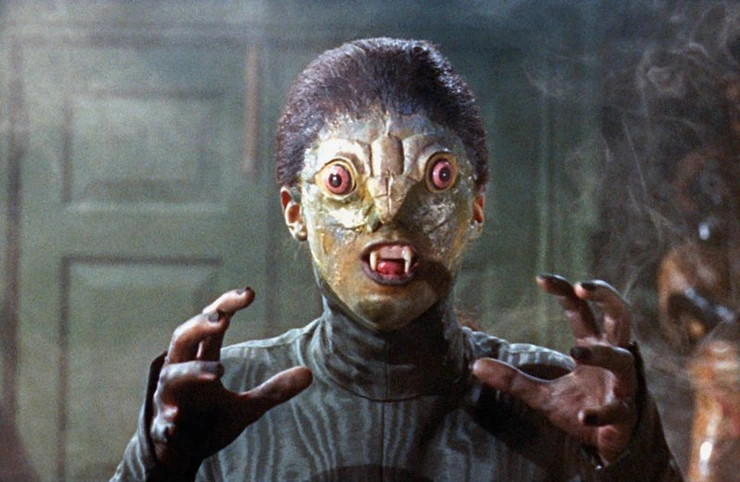
Perhaps this renewed interest in Hammer also reflects a broader shift in the perception of horror itself. With films like Weapons, Sinners, and Hereditary receiving Oscar nominations (and winning), the horror genre is slowly becoming respectable again. Atmosphere, allegory and character are increasingly valued alongside spectacle and jump scares. Guillermo Del Toro’s Gothic romanticism is especially influenced by Hammer, with saturated colours, candlelit interiors, theatrical compositions and lavish production design – most notably Crimson Peak and Frankenstein – where he pays direct homage to The Curse of Frankenstein in that iconic gunshot to the eye.
Meanwhile, filmmakers like Robert Eggers are going back to more traditional monsters, with The Witch, Nosferatu and his upcoming Werwolf all taking on a tried and tested horror formula, while Rose Glass and Mark Jenkin are embracing a much subtler, slow-burning kind of horror. It’s a refreshingly old-fashioned approach, and one that feels like it’s making a comeback. With some of the highest-performing horror films of the year (Obsession, Backrooms, Hokum) resolutely keeping away from the modern tradition of jump scares and excessive gore, it’s refreshing to see filmmakers going back to more traditional sources of horror. In this context, Hammer no longer appears outdated. Instead, it looks strangely prophetic.
The legacy of Hammer Horror is not merely nostalgia for castles, capes and Christopher Lee. Modern horror has brought the genre full circle, returning to themes of trauma, repression, folklore, social anxiety and the ghosts of history. The difference is that we now recognise these concerns as serious artistic subjects. But Hammer was doing the same thing all along, cloaking contemporary anxieties beneath Gothic melodrama, vivid Technicolor and unforgettable monsters.
Perhaps that’s why the studio feels so relevant again. What was once dismissed as gratuitous exploitation now reveals itself to be surprisingly sophisticated: elegant adaptations, economical storytelling and horror with genuine thematic weight. This makes the Hammer Presents range feel particularly fitting. Rather than simply celebrating the studio’s past, it champions films that share the same DNA: a dry sense of irony, striking visual identity and a willingness to unsettle audiences through atmosphere, subtext, and ideas as much as outright shocks.
Discover more from
Subscribe to get the latest posts sent to your email.
About the Author

You must be logged in to post a comment.