La La Land At 10: The Film That Taught A Generation To Dream
There are films we enjoy, films we admire, and then there are the rare few that quietly become a part of who we are.
I still remember sitting in the cinema on 12 January 2017, watching La La Land on its UK opening day. I had no idea I was about to discover a film that would stay with me for the next decade. By the time the credits rolled, I was completely enchanted. I knew I had to see it again. And I did. Again and again. Nearly twenty viewings later, Damien Chazelle’s modern musical remains one of the most important films I have ever experienced.
Over the years, I’ve realised I am far from alone.
For millions of people, La La Land wasn’t simply a beautifully crafted musical or an awards darling. It became a source of comfort for those chasing impossible dreams, reassurance for creatives questioning whether they were good enough and a reminder that success rarely arrives without sacrifice. Ten years after its release, its legacy extends far beyond its six Academy Awards or record-equalling fourteen Oscar nominations. It lives on through the people who continue to carry its message with them.
Released in 2016, La La Land arrived at a time when original movie musicals were a rarity. With Justin Hurwitz’s unforgettable score, Linus Sandgren’s dazzling cinematography and magnetic performances from Emma Stone and Ryan Gosling, it felt instantly timeless. It reminded audiences that cinema could still sweep them off their feet.
Then came the Oscars
The infamous Best Picture envelope mix-up, when La La Land was mistakenly announced as the winner before Moonlight was revealed as the rightful recipient, instantly secured the film’s place in Academy Awards history. It remains one of the most talked-about Oscar moments of all time. Yet while that moment dominates conversations surrounding the film, it isn’t what has defined its lasting legacy.
Its true legacy belongs to the dreamers.
Few films have embedded themselves into popular culture quite like La La Land. A decade after its release, social media continues to fill with people discovering the film for the very first time, capturing their emotional reactions to an ending that still surprises audiences today. Others travel across Los Angeles to visit Griffith Observatory, Angels Flight Railway, the Hermosa Beach pier and countless other filming locations, retracing Mia and Sebastian’s footsteps. Couples recreate “A Lovely Night”, dancing beneath street lamps at sunset, while musicians dedicate months to learning “City of Stars”, “Mia & Sebastian’s Theme” and the breathtaking Epilogue on the piano. Watching La La Land has become more than simply seeing a film. For many, it has become an experience they want to relive and share.
That connection runs even deeper. Across the world, fans have immortalised the film through tattoos. Some choose Mia’s audition speech and its now-iconic line, “Here’s to the fools who dream.” Others opt for the instantly recognisable Seb’s logo, a subtle tribute to Sebastian finally opening the jazz club he spent the entire film fighting for. Others choose the lamppost, piano keys, the Griffith Observatory or silhouettes of Mia and Sebastian dancing beneath the stars. People rarely tattoo films. They tattoo stories that become part of their identity.
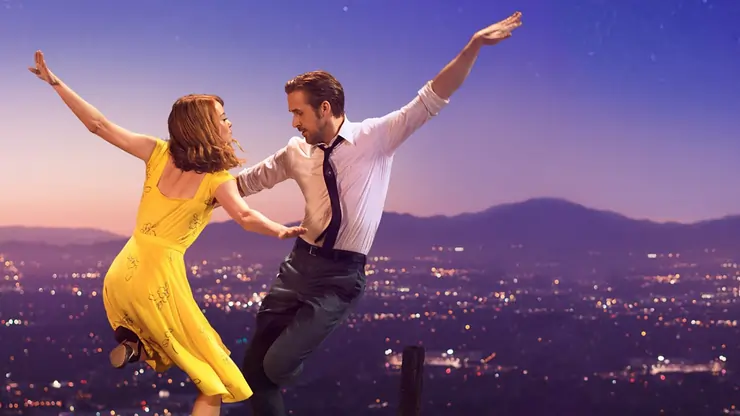
That emotional attachment was evident once again on 20 July 2026, when Lionsgate Executive Vice President Justin Manfredi unveiled a commemorative anniversary poster during a special screening of La La Land beneath the stars at Griffith Observatory. Rather than celebrating the artwork itself, much of the online conversation focused on one subtle detail. Ryan Gosling’s raised arm during the film’s iconic dance pose with Emma Stone had been digitally straightened from its original angle. It was a tiny alteration, yet fans noticed almost immediately. Some questioned why such an iconic image needed changing at all. It served as another reminder that ten years on, La La Land isn’t simply remembered; it is fiercely protected by the audience who grew up loving it.
Some words from fans of the film…
“The film means a lot to me because of the way it captures the feeling of a love estranged, how you don’t stop hoping for their successes even after the breakup. Sometimes the most beautiful love stories have silent endings”– Bel Haly.
“La La Land transports me back to watching Fred and Ginger musicals with my Grandad. It is a technicolour love letter to the power of dreams, and the way in which Chazelle subverts and redefines the Hollywood happy ending is pure cinematic perfection” – Gala Woolley.
Dreams are rarely romantic.
Mia spends years balancing auditions with shifts in a coffee shop, enduring rejection after rejection before finally getting her chance. Sebastian compromises his artistic ambitions to earn a living, playing music he doesn’t love so he can keep pursuing the music he does. Their relationship thrives because they believe in each other’s dreams, yet those same dreams slowly pull them apart.
It is a bittersweet reality that resonates even more deeply today.
The UK’s creative industries now support more than four million jobs, yet for many artists, creative work alone is rarely enough. Research from Arts Council England found that almost a third of cultural freelancers combine freelance work with salaried employment to support themselves. At the same time, actors and musicians are significantly more likely than many professions to rely on second jobs. Financial uncertainty, burnout and an increasingly competitive industry have become defining features of creative life. Suddenly, Mia’s endless auditions and Sebastian’s compromises feel less like Hollywood fiction and more like everyday reality.
Perhaps that is why the ending has only become more powerful with time.
When La La Land first premiered, much of the conversation focused on Mia and Sebastian not ending up together. Audiences wanted the fairy-tale ending. A decade later, many have come to appreciate that the film’s final moments were never about heartbreak. They were about acceptance.
Sometimes love changes your life without lasting forever.
Sometimes people enter your life to help you become who you were always meant to be.
There is no villain in La La Land. No betrayal. No dramatic twist. Just two people who love one another deeply while pursuing dreams that ultimately lead them in different directions. It is a quietly devastating conclusion, one that often becomes more meaningful the older you get.
The world has changed dramatically since 2016. Creative careers have become increasingly difficult to sustain, conversations around artificial intelligence continue to reshape the arts, and financial pressures have made pursuing passion feel riskier than ever. Yet La La Land continues to remind audiences that dreaming still has value.
“Here’s to the fools who dream.”
Ten years later, that line feels less like dialogue and more like a mantra for an entire generation of creatives.
Nearly twenty viewings later, I no longer return to La La Land hoping Mia and Sebastian will somehow make different choices. I return because the film reminds me why those choices mattered in the first place. As I’ve grown older, so too has my understanding of what La La Land is really trying to say. At eighteen, it felt like a romance. At twenty-eight, it feels like a love letter to everyone brave enough to chase a dream, even when the ending isn’t the one they imagined.
Great films don’t simply survive. They evolve alongside the people who love them.
A decade after it first invited audiences to dance among the stars, La La Land has become far more than an Oscar-winning musical. It has become a symbol of hope for anyone pursuing a creative life, despite the setbacks, compromises and uncertainty that inevitably follow.
For ten years, dreamers have looked to La La Land for inspiration.
I have a feeling they’ll still be looking to it ten years from now.

Discover more from
Subscribe to get the latest posts sent to your email.
About the Author



You must be logged in to post a comment.