Interview: Bi Gan on his Cinematic Odyssey Resurrection
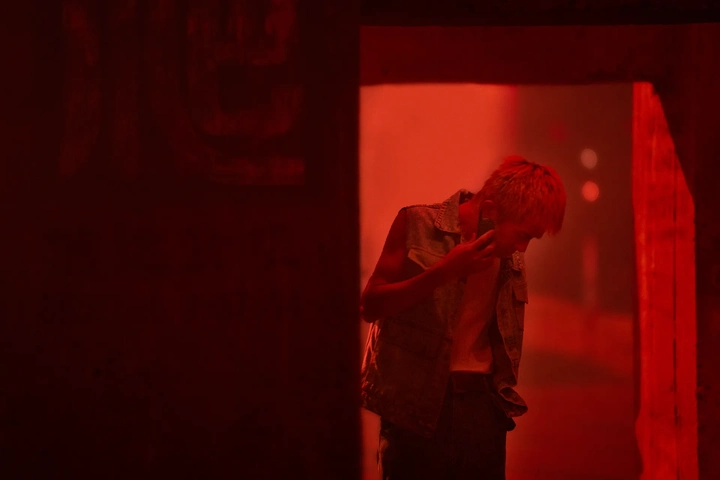
Ever since its premiere at the Cannes Film Festival, Resurrection has been a hotly anticipated title for arthouse cinema goers. Directed by the Chinese auteur Bi Gan, whose previous work consists of Long Day’s Journey into Night and Kaili Blues. Resurrection is a cinematic odyssey, a love letter to film told through 6 vignettes spanning a century. It is a film that has to be seen to be believed, as there is nothing quite like this momentous epic.
Synopsis: In a world where humanity has lost the ability to dream, one creature remains entranced by the fading illusions of the dreamworld. This monster, adrift in reverie, clings to visions no one else can see—until a woman appears. Gifted with the rare power to perceive these illusions for what they truly are, she chooses to enter the monster’s dreams, determined to uncover the truth that lies hidden within.
In this exclusive interview, our writer Robert Ewing asked Bi Gan questions in December, a few months after the film’s UK premiere at the 2025 BFI London Film Festival. We discussed his monumental masterpiece. We discussed interpretation vs intent, meta-storytelling, his approach to long takes, and what keeps his candle burning.
TPM: Thank you so much for speaking to me today. It’s an absolute honour. Just to kind of get right into it, Resurrection feels like a love letter to cinema and what I find powerful about cinema, and the same can apply to all of art, is that while the creator’s intentions have a certain meaning, ultimately, it’s the audience’s interpretation that gives art its true power. So, during the creative process, were you consciously thinking about that dynamic between intention and interpretation, or was your priority to make a film that fully expressed your vision and leave the rest to the audience?
Bi Gan: Actually, I think my films are very particular in terms of the narrative structure. So, I think my films really need
the engagement of the audience. Only when the audiences engage with the film can we add the information that was left blank in the first place, and we get the whole information, the whole storyline, out of the film, and especially in Resurrection, you can see that from the first scene, because there was a burning screen. We can see a theatre with all of the audience sitting inside, and that scene is a form that is like a mirror with the audience in reality.
I was going to ask about it because early on in the film, when the screen burns away, we see the audience stare directly into the camera lens, almost as if, as you said, the film acknowledges the audience. So, was that meta dimension, part of Resurrections ‘ conception, or something that emerged later on in the process?
Bi Gan: I think you capture the sensations in Resurrection very accurately. So, I would like to go back to the first scene in which you see a lot of the audience staring into the camera lens, and then there was a burning screen. This is the kind of audio-visual effects that I wanted to create to give a suggestion, or actually, it’s delivering a very direct message that the audience is watching this film, the Deliriants themselves, they are hiding away from reality. So, this is the meaning of the first scene. And in our original concept, we didn’t call these people Deliriants, but still, that call was there, and during the creative process, we confirmed that we wanted to step back to a century ago, and we wanted to develop the time, develop each chapter and this sensation together with the audiences, and tell a story about how The souls connect with the Earth where they inhabit.
One thing I love about Resurrection to continue on is that the film suggests that dreams and cinema are deeply connected. But the main difference is that film is an artistic product for others to experience, while dreams are more private films created by the subconscious. So, do you think that the ability to dream inherently means someone has the potential to be a creator or an Artist?
Bi Gan: Probably, we can ask this question in a more general or universal way. So, what I want to explore is how, if we regain the ability to dream, and how we bring back our ability to feel the world, to experience the world into our body. So, how do we regain this ability of exploring the world through physical sensations, and how do we actually make ourselves a more lively person, a person who’s actually living in this world nowadays? I feel that our feelings and our sensations always succumb to different kinds of electronic devices, and also our way of watching films has changed. We rely on different streaming platforms, and these are all the results brought by social development. I don’t want to comment on it, speaking of it positively or negatively, but I still feel that we need to regain this ability to feel the world, to experience this world through our body. I think this is what’s actually important and what’s actually necessary. And in terms of whether being able to dream makes you an artist or a creator, that’s not something that I care about. What I care about is bringing back our physical sensations.
I love the honesty. Many of your films feature either extended one-takes or long takes, and the same applies to Resurrection, but you’ve mentioned in the past that the long take, especially for the Y2K chapter, wasn’t originally planned, but you chose to shoot that way because it was a technique you and your crew were familiar with. So how does working in long takes and oners influence your storytelling, and why do you consider it such a powerful tool in your creative toolkit?
Bi Gan: Actually, the technique of long takes, it has its own limitations. I think in order to do long scenes or long takes, you have to first come up with a solid script, because you always need a lot of prepping in terms of the script to add information to this long take. For example, in Long Day’s Journey into Night, there was this 60-minute scene in which I adopted this familiar technique, and we spent a lot of time building this labyrinth and giving it structure in terms of the scripting and the narrative, so that we can bring the story framework to the audience. But for Resurrection, this is something different for me, because we didn’t have that much narrative or we didn’t have that much scripting before the shoot, which makes the long take very difficult for us. But in the end, we still decided to do it because we feel that the last night in 1999 needs a kind of continuity.
So the narrative texture needs a continuous flow to make it complete, and we want to do everything in a continuous flow toward the point when the sun rises so that we can bring out the most intriguing part of this story, that is after you wait for so long, after several different moments of waiting, you finally hit this moment, and that’s the sunrise. This is the kind of vibe, or kind of sentiment, we want to deliver, which also echoes the line in the film, why do people watch? Why do people like Sunrise so much? What’s so good about it? But it’s that moment, the fleeting moment, that’s so beautiful about it, but actually, using the technique of long take is very burdening in this film, and I’ve already mentioned the reason that is we didn’t have that much script, or we didn’t have that much language based materials for us to use beforehand, but then we still came up with a good plan that is to in, to weave the story together, or to put the story line together with the characters perspective changes.
So, instead of using a script or using a linguistic narrative, we follow the perspectives of the different characters, and we see the integration of different characters’ perspectives. And I think this character perspective, way of doing the narrative, brings out the beauty of modern film, and you can see it in the last scene. So, these young lovers had an outburst of their emotions, and they were driving this boat, and they were free, but it’s also a moment of death. But at that moment you saw, you see the sunrise, and so that’s very beautiful, and I think it can only be done through the long take.
Yeah, it’s an incredible scene. Kind to wrap this up early on in the film, you know, you establish it. Dreaming in this world is like wax burning on a candle, and once it burns out, the Deliriant dies. So, what keeps that candle burning for you? Is it life? Is it cinema? Or is it something in between that sustains your dreaming?
Bi Gan: My answer would be, for sure, it’s not cinema itself that keeps my candle burning. I will say it’s the constant exploration of life, and this is what keeps my candle burning. So, you always experience this process when you’re young. Maybe you understand the world in a very naïve way, but then you deepen your understanding of humans, of life, of the world itself. So, I think it’s always one way or another; I either try to explore or understand this world proactively or passively, but it’s always the exploration of the meaning of life that keeps me going, and also, this thing of burning suggests that I don’t want to surrender my physical sensations to other things. I don’t want to surrender to the digital platforms or these other technologies; I want to keep all the sensations in my defective body.
Resurrection will be in UK and Irish cinemas from March 13th.
Discover more from
Subscribe to get the latest posts sent to your email.
About the Author