Hope Review
Everyone can attest that at least once a day, we yearn for hope—whether it’s for the suffering of our workday to end or for the chance to achieve our lifelong dreams. We all cling to that feeling of optimism. However, the film Hope poses a poignant question: would you rather hope for your child to be alive as a murderer or dead as the victim of a horrific crime? Hope is bleak in its thought-provoking exploration of optimism, while also serving as a fascinating critique of Japanese media and public gossip.
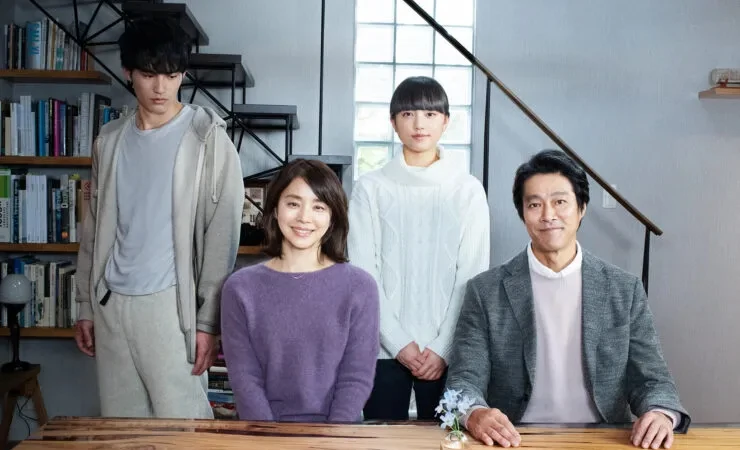
Kazuto (Shinichi Tsutsumi) is an architect whose family leads a peaceful life. His wife, Kiyomi (Yuriko Ishida), works from home as a proofreader. Their daughter, Miyabi (Kaya Kiyohara), is preparing for her high school entrance exams, hoping to gain admission to her dream school. Their son, Tadashi (Kenshi Okada), has been struggling ever since a football injury permanently sidelined him from the sport. Lately, Tadashi hasn’t been himself. What truly alarms Kazuto and Kiyomi, however, is the discovery of knife packaging in Tadashi’s rubbish bin. Over the course of a single night, their lives are changed forever: one of Tadashi’s classmates is murdered, Tadashi is missing, and rumors swirl that he is either the perpetrator or another victim.
Shinichi Tsutsumi is captivating as Kazuto, a father who clings to the hope that his son is innocent—even if that means his son is dead. Meanwhile, Kiyomi, played harrowingly by Yuriko Ishida, holds onto a different hope: that her son is alive, even if it means he is a murderer, because at least then she would get to see him again. These opposing views of hope form the emotional core of Hope’s narrative. Their conflicting beliefs not only consume them but also drive their actions—Kazuto does everything he can to push the narrative of his son’s innocence, while Kiyomi spirals into a painful reckoning with the possibility of his guilt. These dynamics intertwine beautifully with the film’s scathing portrayal of the media and the destructive power of gossip.
For the uninitiated, Japanese media—especially in its handling of news stories—can be deeply manipulative. News is often treated as just another form of entertainment, edited to fit whatever narrative broadcasters wish to push. When Kazuto gives a statement to the media about the murder, his words are carefully measured—compassionate, yet cautious, avoiding any rush to judgment. However, the footage is edited to make him seem cold and indifferent, as if, because the victim isn’t his son, he feels no sympathy. This blatant distortion of the facts only fuels public outrage against his family, especially since the police refuse to comment on the case until the investigation is complete.
Very little information about the case is being made public, fueling speculation among the public—especially as a sleazy journalist begins asking questions about Tadashi, painting him as a potential perpetrator of this horrific crime. Gossip and media scrutiny tear the family apart, with the ensuing drama inflicting more psychological damage than the crime itself. The film highlights the dangers of jumping to conclusions and rushing to judgment without facts, showing how such reckless speculation leads to disastrous consequences. While not the central focus, the film also subtly suggests that the police may contribute to this cycle by choosing to remain silent, allowing gossip to take on a life of its own.
As the film approached its conclusion, I worried that it might undermine its own message. Fortunately, Hope sticks the landing, delivering a truly impactful resolution. Hope is a gripping and poignant film—a scathing critique of Japanese media and the destructive power of unchecked speculation.
★★★★
The Japan Foundation Touring Film Programme 2025 takes place in cinemas around the UK from 7 February – 31 March 2025 / Shinichi Tsutsumi, Yuriko Ishida, Kaya Kiyohara, Kenshi Okada / Dir: Yukihiko Tsutsumi / 15
Discover more from
Subscribe to get the latest posts sent to your email.
About the Author