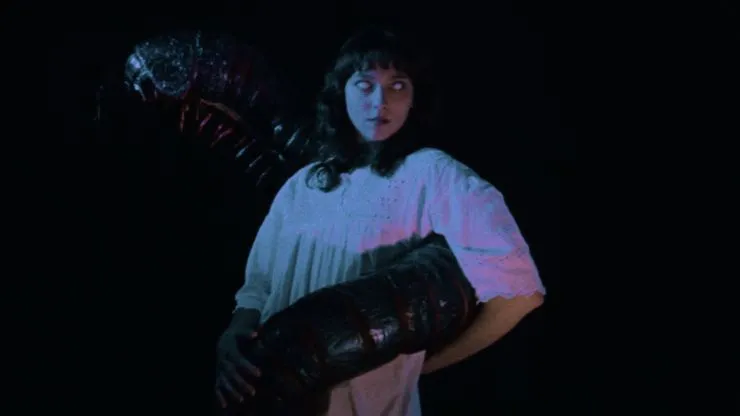
First Days Review (IFFR 2026)
Dying, they say, is like crossing towards bliss, through a land of brilliant light and powerful sound. Those who have had a near-death experience, at least, speak of that irresistible light, one that disarms the senses and drives sensation. Naturally, we cannot know if this is how post-dying actually feels. None of those who lived to recount their dying completely and absolutely died, of course (at least not at that moment).
First Days captures that moment (not quantified or measured within the known system of time, but as it might feel,) a fascinating attempt not many filmmakers have ventured. In fact, beyond the psychedelic trip offered by Gaspar Noé’s Enter the Void and aside from the science-of-it-all approach by Flatliners (the original version only, where Julia Roberts is not merely an awakened, sensitive young doctor, but a redefiner of how to ditch chivalry,) the cinematic examples of the experience of dying and being dead are scarce and rarely worth naming. For a topic so ubiquitously pertinent to life and so impossible to grasp, speculations and visualizations, any proposition really coming from a filmmaker, it’s a definite yes and thank you.
In this case, directors Michael Karrer and Kim Allamand joined forces to capture the ancient tale suggesting a house that stands in place of limbo, a place that receives us from our physical world to the beyond, bestowed by death. There, two women go about their business, mundane and unclear daily tasks, silently and only ostensibly present. Slowly they merge with lights offered in the woods, and they dissolve within the limits of interiority and exteriority, with sounds coming from uncharted sources, luring them outward. A side suggestion of not exactly togetherness, but non-aloneness never really associated with death.
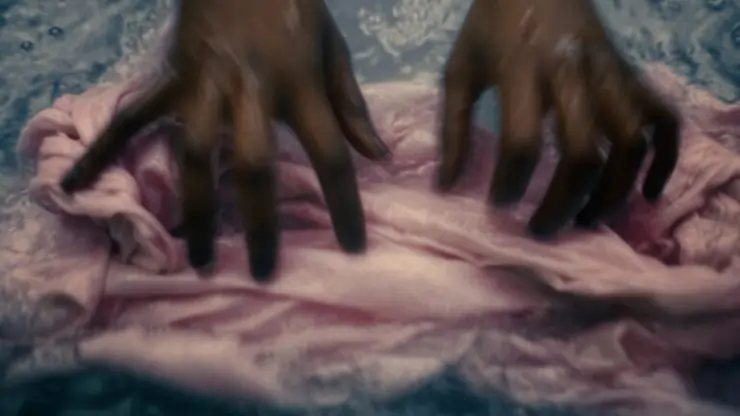
Light, as you imagine, is seminal in this picture. Cinematographer Fabian Kimoto executes neatly, making on a tangent a study on lighting skin of colour. The light interplay progressively merges with colour distortion into a dissolution that’s a trick to our vision. Dizzying and dazzling, for the majority of its fair runtime, First Days is managing to avoid difficulties often encountered in the viewing of experimental works. Sound is a solid companion, resembling what I would think going deaf sounds like, pulsing your eardrums as if excavating to summon you out of the body (something like sound meditation practices strive for, I suppose). These two elements, light and sound, elevate the film to an experience, deviating fully from the norms of traditional cinema. First Days, I reckon, is a proposition for a lullaby (implying the presence of someone else beyond ourselves) for the state between dying and being dead.
Or so I thought, still impressed by the offer of the concept not set to disclose the transitional moment between life and death but give a story to it. In hindsight, a torrent of landscape imageries are invading the experience, however poetic and wandering, they speak (conventionally) more of life than beyond it. They also reminded me of the universal and univocal view from a distance, as if the human death assumes an eye superior to any other form of life. I trust, though, this is a gesture of humility to the nature that has received us; an exhausted and saturated call for humbleness. Permit my banter, but we humans are at our most modest when humour allows imagination to picture our place on earth—sometimes no grander than just ‘pushing up daisies.’
★★★1/2
First Days, 70’ / Dir. & Screenplay: Kim Allamand, Michael Karrer / Cinematography: Fabian Kimoto / Editing: Kim Allamand, Michael Karrer / Sound design: Jacques Kieffer, Peter Bräker / Music: Peter Bräker, Celer, Olivier Messiaen, Naran Ratan / Cast: Nasheeka Nedsreal, Jia-Yu Corti / Production company: Sabotage Kollektiv / Switzerland
https://pagead2.googlesyndication.com/pagead/js/adsbygoogle.js?client=ca-pub-1211290295647479
(adsbygoogle = window.adsbygoogle || []).push({});
Discover more from
Subscribe to get the latest posts sent to your email.
About the Author