Trouble In Paradise Review (Criterion Collection)
One of the most important film directors of all time, Ernst Lubitsch, was hugely influential in shaping cinema as we know it, particularly the musical and the screwball comedy, and yet most modern cinemagoers won’t know his name. In the golden age of Hollywood, Lubitsch’s name was second only to Alfred Hitchcock in being synonymous with a distinct style of filmmaking. There was even a term for it: the Lubitsch Touch – a byword for the elegance he brought to all his films, a lightness that belies the complex, economical storytelling beneath. Many directors tried to emulate him, and you can see his influence on the likes of Preston Sturges, Howard Hawks and his protégé Billy Wilder. As Wilder himself put it: “If one could write Lubitsch touches, they would still exist, but he took that secret with him to his grave.”
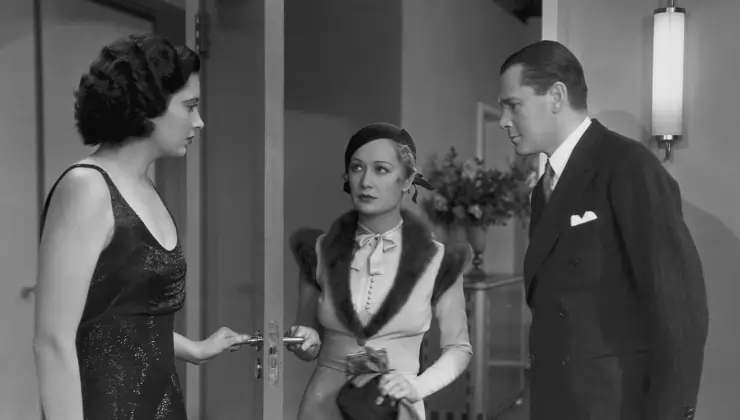
Often cited as his finest film, Trouble in Paradise is an effortlessly charming romantic comedy about two master criminals: a pickpocket, Lily (Miriam Hopkins), and a gentleman conman, Gaston Monescu (Herbert Marshall), who set their sights on a wealthy widow, Mariette Colet (Kay Francis). As they attempt to take her for all she’s worth, Gaston begins to develop feelings for his target, threatening both the scheme and his partnership with Lily.
The first thing to say about the film is that it was made in 1932, just before the enforcement of the Hays production code, which prohibited anything unseemly or overtly suggestive from being shown onscreen. Even without the code, Trouble In Paradise drew controversy for its frequent use of innuendo and implication, particularly through Lubitsch’s highly suggestive use of editing. Despite its popularity, the film was rarely shown after its initial release, and only re-released in the mid-sixties, which may account for its relative obscurity outside cineaste circles. The flipside of this is that it now feels fresher than many romantic comedies of the period: never maudlin or overly sentimental, but sparkling with an impish sense of mischief, with gleefully amoral protagonists who are never made to see the error of their ways.
All the performances feel incredibly modern, and it certainly seems as if each of the leads is having a great time in their roles. As Gaston, Herbert Marshall is the epitome of urbane gentility. He’s maybe a little stiff in places (perhaps due to his false leg), but the subtle character beats that humanise him are sensitively performed. Hopkins is also brilliant as his less sentimental lover/accomplice, expertly switching between performance styles depending on her audience; playing the ditz for her marks and reverting to her sharper, more calculating persona for Gaston. Their dynamic is a delight, and their first scene together – flirting by stealing each other’s valuables and then casually returning them to each other – establishes their relationship with precision, revealing their true natures almost simultaneously to each other and the audience.
As the ostensible sucker, Kay Francis brings much more nuance to Mariette than the role might suggest. She doesn’t play her as naïve, but with a playful intelligence that keeps her from feeling like just a victim. Reportedly, other directors would alter her dialogue, reducing the amount of “R” sounds to mask her lisp, but Lubitsch emphasises it, and it becomes part of her charm, lending her a disarming softness that masks her underlying shrewdness. Her luxurious, Travis Banton-designed wardrobe is remarkable – and another element that would have struggled under the Code. Though her ending is bittersweet, she emerges stronger than she began, if a little poorer.
Edward Everett Horton and Charles Ruggles bring contrasting performance styles to their roles as rival suitors for Mariette’s hand. Horton was a staple of screwball comedies, but this might be his most fully rounded and funniest performance. He was a master of facial expressions – his double and triple takes are perfectly executed, and his mannerisms are genuinely funny, even when viewed through a 21st-century lens. Ruggles is a great foil, his stoicism the perfect counterpoint to Horton’s more expressive reactions. His deadpan reactions to Horton are brilliant, simply raising an eyebrow when Horton stretches his facial muscles. Of course, it helps that their rivalry is so wittily depicted. After the third “goodbye” from Horton, Ruggles confronts him with “you’ve been saying goodbye for the past half hour and staying on. Why don’t you say ‘how do you do’ and go?”
The script by Lubitsch and Sam Raphaelson is beautifully observed, and quietly salacious, insinuating everything while showing almost nothing – whether through closed doors or Horton’s coy references to his “business associates.” Lubitsch is in complete command of his narrative, never allowing the film to outstay its welcome; Each scene unfolds with an effortless elegance, and there isn’t a superfluous shot to be found. As François Truffaut put it, “From beginning to end, we are immersed in the essential.”
Lubitsch’s storytelling instincts are equally sophisticated, and he never holds the audience’s hand. As Wilder observed, he never spells things out – “unlike other directors who say 2+2=4, Lubitsch just says 2+2” – trusting the viewer to pick up on subtle details for themselves. This is evident in moments like the leaf on Gaston’s trouser leg, which lets us know his true nature, and the focus on Mariette’s handbag. These are forerunners of similar moments like the fashionable hat from Ninotchka, the cat in The Third Man or the cracked compact mirror in The Apartment. This precision extends to the characters, whom Lubitsch never softens, even as we grow to like them. They are charming, witty, and utterly amoral. Just as Gaston appears to falter in his resolve, buying Mariette flowers, Lubitsch neatly undercuts the gesture by having him surreptitiously charge them to her own account.
Trouble in Paradise is a genuine delight of pre-code Hollywood. It has a vitality and a sense of exuberance that wasn’t always present in Hollywood romantic comedies. Is it Lubitsch’s best film? I don’t know – for me, To Be Or Not To Be is the one that best represents Lubitsch firing on all cylinders. But there’s no denying the charm and fun inherent in this film, and it might be the purest distillation of the Lubitsch touch, encapsulating the playful subversiveness that characterises the director’s best work.
Special Features
This release in both HD and lovingly remastered UHD from Criterion comes with a commentary from Lubitsch biographer Scott Eyman, an introduction from Peter Bogdanovich, and a video essay by critic David Cairns.
★★★★★
Released on 4K UHD from 20th April / Herbert Marshall, Kay Francis, Miriam Hopkins, Edward Everett Horton, Charles Ruggles / Dir: Ernst Lubitsch / The Criterion Collection / U
Discover more from
Subscribe to get the latest posts sent to your email.
About the Author