The Days Off Review (2026 Locarno Film Festival)
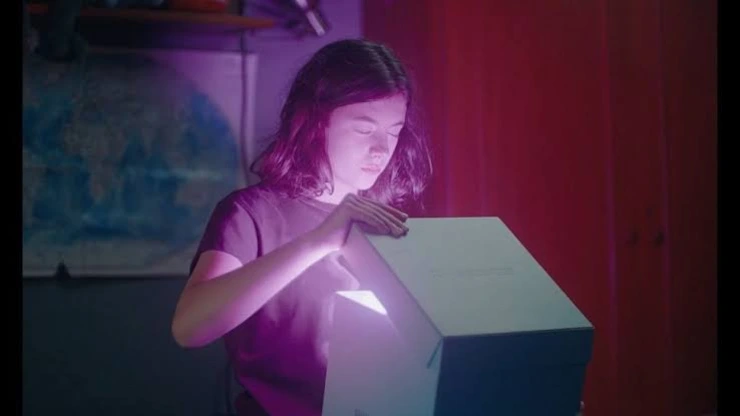
It’s summertime, and everything around Bego seems in hibernation. The vibes have turned heavily sleepy; a dry spell is cast upon our characters. Bego is drawn to it more than anyone. Rest is at stake, and parental relationships as well, but Bego, a quiet, determined, cheeky 12-year-old, has set her mind on mastering shifting, widely known as lucid dreaming.
The Days Off is arranged like a summer lull. Days meet nights, and nights glow like fireflies through the screen. Central is a lunar eclipse. The moonlight is potent, magical, permissive. There is no threat—or at least none to be felt by our main character. The idleness has the conviction of a true teenager. The cause of it, the disturbance landing on reality, is present, in the house, in school. The Days Off , in true teenage fashion, resists it. Inversely, the film is more interested in finding comfort in the uncanny, nearly sinister image of someone’s sleep, examining at the same time how teenage innocence can play out otherwise.
The film seems to inhabit a near world, culturally rooted in fan fiction. Nearing a psychological extension of it, it serves notions of immersive escapism, exactly matching the screen-based realities described by the director Jane Schoenbrun in their film trilogy (We’re All Going to the World’s Fair, 2021; I Saw the TV Glow, 2024; Teenage Sex and Death at Camp Miasma, 2026). Retro game sounds, signal interference, and plain color blocks create an air of a past future, an era as if it had happened and were seen from a distant time. That’s a curious feature to evoke, for it is utilizing fully the mechanics of the medium (film) and the message (online life).
The Days Off is overtly personal, and I bet that Bego was conceived as an alter ego of the Argentinian director Lucila Mariani. Thankfully, the story does not hold much self-referential indulgence. The script is well-measured, and the image is composed in a thoughtfully subtractive manner. For a directorial debut (a concept that, by the way, becomes incrementally synonymous with the coming-of-age genre), Mariani maintained her composure. It also seems that Mariani joined a rising cohort of peers in crafting a retro gaze upon childhood, stripped of nostalgia but rich in introspection, as if it were an artifact in anachronistic preservation (see, for instance, Moon, 66 Questions, 2020, by Jacqueline Lentzou). For the time being, let’s call this generation the neo-romantics.
All things considered, temperatures and sentiments alike, The Days Off is an absorptive experience, a reverie, that one should definitely seek on warm nights.
★★★★
Los días libres (Days Off) premiered at the Locarno Film Festival 2026, in the Filmmakers of the Present competition section. / Dir: Lucila Mariani / Cinematography: Victoria Pereda / Producer: Paula Zyngierman / Maravillacine, / Argentina, Brazil, Mexico, France
Discover more from
Subscribe to get the latest posts sent to your email.
About the Author