Stoker Interview – Nicole Kidman
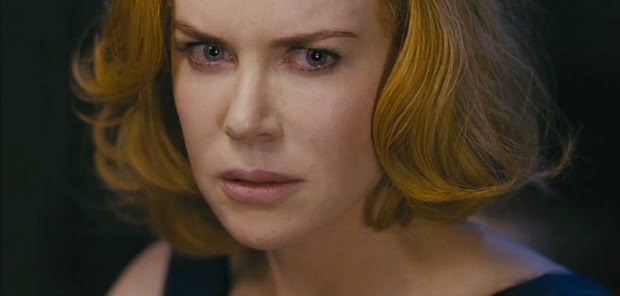

When Nicole Kidman compares Korean filmmaker Park Chan-wook with the late, great Stanley Kubrick it is, of course, a huge compliment given with an insider’s knowledge of the methods of two directors she greatly admires.
Ms Kidman has had the pleasure of collaborating with both directors. She was the leading actress in Kubrick’s last film, Eyes Wide Shut (1999) and stars in Park’s first English language film, the psychological thriller Stoker, with Mia Wasikowska and Matthew Goode.
“I enjoyed working with Director Park very much. And it was very similar to working with Stanley,” she says. “He reminded me of Stanley a lot in that attention to detail that they have in their films. And there is that slightly heightened naturalism, which is what Stanley was interested in too.”
Stoker is the story of India Stoker (Mia Wasikowska), whose father dies in an auto accident. Soon after her Uncle Charlie (Matthew Goode), who she never knew existed, comes to live with her and her emotionally unstable mother (Nicole Kidman). Soon after his arrival, she comes to suspect this mysterious, charming man has ulterior motives, but instead of feeling outrage or horror, this friendless girl becomes increasingly infatuated with him
Director Park, says Ms Kidman, was interested in exploring the genesis of evil and the notion of “bad blood” and whether it can be passed on from one generation to the next.
“Park is such a gentle man and yet he makes these amazing films and he has these incredible ideas that come out of him. There are very strong intellectual ideas that he puts forward in his films,” she says.
“And it’s the same with Stoker. He creates a very tense atmosphere in what is, on one level, a thriller that builds and builds but it’s actually about evil and the genesis of evil.”
“When we were making it, the director said to me he wanted to make a film about bad blood even though later he has kind of said, ‘oh it’s about other things..’ But I just remember him saying that and it had such a strong appeal.”
“It sounded very Korean, in a way, the way in which bad blood is passed on through the family and whether that actually happens. It’s nature versus nurture. And that was really interesting to me.”
Park Chan-Wook’s previous films – including the acclaimed Sympathy For Mr Vengeance, Oldboy and Lady Vengeance, which are known, collectively, as The Vengeance Trilogy – often feature graphic violence.
Ms Kidman is not interested in films that use violence gratuitously and points out that Director Park, especially in Stoker, uses it an integral part of the story.
“I don’t like exploitative violence but I’m not opposed to violence in cinema when it has a relevance,” she says. “As long as films have an intellectual idea behind them and isn’t just pure exploitation then I’ll consider them and I don’t mind being challenged viscerally, intellectually.
“I’m up for that and I’m open to that. I’m open to that in my art in terms of when I go and view art, when I see things, and I’m open to it in terms of literature and cinema and therefore willing to put myself in that place too, at times.”
Stoker was filmed on location in and around Nashville, Tennessee – where Ms Kidman lives with her husband, country singer Keith Urban and their two daughters – and on set the director, who doesn’t speak English, had a translator with him at all times.
 The language barrier was, she says, the only concern she had when agreeing to take on the project.
“That’s your number one concern – how is he going to direct a film in English when he doesn’t speak a word of English? That was the main thing. My concern wasn’t his talent and it wasn’t whether he was going to know what to do with the camera or whether he had a grasp on the story or the fluidity of the characters because clearly, he is a very gifted filmmaker.
“Communicating through an interpreter takes time, obviously, and with the nuances of direction specific words can send you in the wrong direction so you have to clarify sometimes.But strangely enough, once you get the rhythm of it, it isn’t that jarring especially because Director Park constructs his shots in a particular way. He would have these long, two, three minute, shots which would take half a day sometimes to shoot so you are doing it very slowly and you have plenty of time to talk it through and make sure that you knew exactly what he wanted.”
She was bowled over by the result. “I think he has a great intellect behind his filmmaking. He really is a master and he makes beautiful films,” she says.
“I watched the film for the first time at Sundance and I was like, ‘wow!’ He really is masterful in his construction of the film. And there were things that I wasn’t aware of at the time when we were filming, like the hair-brushing scene that then becomes the grass.
“He never explained any of that so in a weird way it was like being one of his instruments and then he goes away and composes his score.”
Ms Kidman was also very impressed with her co-star, Mia Wasikowska, a fellow Aussie, and she predicts a great future for the young actress.
“I actually said to her once, ‘if you ever need any advice, I’m here.’ And I had actresses who were older than me say that to me and I used them for advice at times. And I truly meant that because it’s a tricky path to navigate sometimes.
“You know, ‘who has got your back? So it’s nice to be in a place to offer that advice. But Mia is pretty together. She was sitting on set and I said ‘what are you reading?’ And she was reading Chekov. And I loved her for that!
“I was like, ‘there we go. That’s my girl!’ Most people are on their phones and she was reading. I used to do that, too. And that’s why I became an actor, because I read so much. Not just plays, but a lot of literature and that’s how I developed my sensibility really and it was the best form of escape when I was a child. I loved reading.
 “She hasn’t asked me for advice and you know, she has wonderful parents and they came to visit her on set. She has a lot of support and she is well to being such a magnificent star. She has a gorgeous persona and talent. But it’s nice to say, ‘just pick up the phone if you ever need to.’”
Ms Kidman will be seen playing some very diverse roles in the coming months. In Lee Daniels’ The Paperboy, a southern gothic thriller set in the late Sixties which premiered at the Cannes Film Festival, she plays Charlotte, a young woman who strikes up a relationship with a violent man, Hilary Van Wetter (John Cusack) accused of murder awaiting his sentence on death row.
She plays Grace Kelly alongside Tim Roth as Prince Rainier III, in Grace of Monaco, a drama directed by Olivier Dahan (La Vie En Rose)
“I’m not interested in playing myself and I’m not interested in playing the same thing,” says Ms Kidman. “I’m not good when I have to be the girl next door, that’s just not my thing so the more extreme the better, in a way.”
She will also be seen as Patricia Lomax, the wife of Eric Lomax, a British prisoner of war in a Japanese internment camp, in The Railway Man, directed by Jonathan Teplitzky and co-starring with Colin Firth.
She will shortly begin filming Before I Go To Sleep, based on the critically acclaimed novel by S.J. Watson, directed by Rowan Joffe and co-starring Firth and Mark Strong.
Ms Kidman grew up in Sydney, Australia and made her film debut, aged just 16, in Bush Christmas. She went on to establish herself as one of the best actresses of her generation with films including Days of Thunder, Flirting, Far and Away, To Die For, Eyes Wide Shut, Moulin Rouge, The Others, The Hours, Dogville, Cold Mountain, Birth, Nine, Rabbit Hole and many more.
Ms Kidman is married to the country singer Keith Urban and they live in Nashville with their two daughters. “We met later in life and when you meet later in life, as a couple, you have a much better chance of really going to a deep place,” she says.
“We met later in life and we know who we are and where we are at. And we are very fortunate because – and I know it sounds corny – I just adore him. I just love him. It’s that simple. It will look corny in print – but that’s the truth.
“We live in Nashville because Keith’s career is country music. That’s his passion so you have to live in Nashville if you are in country music. And I’m perfectly happy there and glad to support him.”
Q and A follows:
Q: You’ve said in the past that you don’t like gratuitous violence in movies. Park Chan-wook is famous for violence in his films. Did that trouble you?
A: I don’t like exploitative violence but I’m not opposed to violence in cinema when it’s relevant. As long as films have an intellectual idea behind them and isn’t just pure exploitation then I’ll consider them and I don’t mind being challenged viscerally, intellectually. I’m up for that and I’m open to that. I’m open to that in my art in terms of when I go and view art, when I see things, and I’m open to it in terms of literature and cinema and therefore willing to put myself in that place too, at times.
Q: Had you watched his previous movies?
A: Oh yes. I watched The Vengeance Trilogy. I think I only saw half of Oldboy because I was like ‘oh my god..’ (laughs) I was watching it on a plane and sitting next to my husband and Keith just saw me putting my hands up to my face and shrieking and he was like, ‘what are you watching?’ And I showed him the dental scene. But you know, Park is such a gentle man and yet he makes these amazing films and he has these incredible ideas that come out of him. There are very strong intellectual ideas that he puts forward in his films. And it’s the same with Stoker. He creates a very tense atmosphere in what is, on one level, a thriller that builds and builds but it’s actually about evil and the genesis of evil.
Q: In what way?
A: When we were making it, the director said to me he wanted to make a film about bad blood even though later he has kind of said, ‘oh it’s about other things..’ But I just remember him saying that and it had such a strong appeal. It sounded very Korean, in a way, the way in which bad blood is passed on through the family and whether that actually happens. It’s nature versus nurture. And that was really interesting to me.
Q: Park Chan-wook is regarded as a cinematic craftsman. Is that, in part, what attracted you to Stoker?
A: I think he has a great intellect behind his filmmaking. He’s a master and he makes beautiful films. I watched the film for the first time at Sundance and I was like, ‘wow!’ He really is masterful in his construction of the film. And there were things that I wasn’t aware of at the time when we were filming, like the hair-brushing scene that then becomes the grass. He never explained any of that so in a weird way it was like being one of his instruments and then he goes away and composes his score.
Q: How would you compare him to other directors you’ve worked with?
A: I liken Director Park a little bit to Stanley Kubrick even though their films are different. And then a little bit feels like The Others (directed by Alejandro Amenabar) in terms of some of its themes.

Q: How did you overcome the language problem because the director doesn’t speak English?
A: When I met him we sat down and he had such a strong vision of the film already and how he was going to do it, which was fantastic. That’s your number one concern – how is he going to direct a film in English when he doesn’t speak a word of English? That was the main thing. My concern wasn’t his talent and it wasn’t whether he was going to know what to do with the camera or whether he had a grasp on the story or the fluidity of the characters because clearly, he is a very gifted filmmaker. Communicating through an interpreter takes time, obviously, and with the nuances of direction specific words can send you in the wrong direction so you have to clarify sometimes. But strangely enough, once you get the rhythm of it, it isn’t that jarring especially because Director Park constructs his shots in a particular way. He would have these long, two, three minute, shots which would take half a day sometimes to shoot so you are doing it very slowly and you have plenty of time to talk it through and make sure that you knew exactly what he wanted. It was very specific and it’s not like, say, Lee Daniels (director, The Paperboy) who is the complete opposite and is very brazen and will be yelling things like ‘try it!’ off camera. It’s a completely different kind of filmmaking. And I got to make The Paperboy and Stoker back-to-back, which was really weird. I went from Louisiana and Lee to Nashville and Director Park but as an actor that’s amazing.
Q: You’ve worked with non-English speaking directors before – I’m thinking of Amenabar on The Others. Was it a similar experience?
A: Part of the reason I had so much trust in terms of Director Park not speaking English is that when I worked with Alejandro his English was very limited. Director Park speaks no English whereas Alejandro spoke some but he certainly wasn’t fluent. And I think that they are both very skilled an educated in terms of cinema and I think if you are in the hands of somebody that has that sort of expertise then the language barrier is less frightening. If I was working with someone and it was their first film and they spoke no English whatsoever and they also didn’t have an array of previous work to base it on then I probably wouldn’t be so willing.
Q: And they are both very challenging characters. And then you also played Grace Kelly in Grace of Monaco…
A: Yes, Grace was after The Paperboy. And in between that I did some work on The Railway Man, an English film and I really wanted to do that because of the theme of that story, which is about forgiveness. It’s a small role for me but it’s something that I wanted to do and I wanted to work with Colin Firth.
Q: And what was the main attraction to do Stoker?
A: The director.
Q: And what did you like about the part?
A: Evie has a refined quality to her mixed with instability. When you study theatre at drama school a lot of the roles – in terms of Tennessee Williams or the Greek tragedies or Shakespeare – the mother roles are always that, they are very complicated. And The Others I always thought was like a Greek tragedy and this has got some Tennessee Williams overtures too, even though Park was like, ‘I don’t want this to be like a Tennessee Williams character…’ He didn’t want it set in the South and that’s why we don’t have southern accents. He wanted it almost timeless, too. But there are qualities in that character that are very febrile and needy.
Q: Park Chan-wook has been compared to Hitchcock in the way that he builds suspense in his films. Is that a good comparison?
A: I think he is inspired but he has his own stamp, if that makes sense. I would say he has his own way of shooting. He has a DP (director of photography) that he works with who is very much part of his collaborative process, which you tend to find with a lot of really great directors, they usually have a strong relationship with their DP, someone they use over and over again. And the DP Chung-hoon Chung is very, very talented. He is Korean as well and they have their own cinematic language and they are very precise in how they want to frame your face. There’s a scene where I look at Mia and I say, ‘I want to see life tear you apart’ and he had a very particular way of shooting that. It was one shot and he didn’t want to cut away. And there was no improvisation. With something like The Paperboy it was practically all improvisation. So they are very different ways of making films. But as an actor and the way you are trained you hope that you can adapt and you are there as a conduit and to help fulfil the director’s vision.
Q: In Stoker, was it hard to play a mother who is so disappointed by her daughter?
A: I don’t see her as disappointed, I see her as wanting her daughter to love her. I sat down with the director and said, ‘what is the basis for this? I’m not quite sure..’ And he said that from the minute she had India, the child has cried every time she held her. She is connected to the father and she is not connected to the mother. And she likes to hunt and she’s predatory and that’s a very powerful mix of emotions. And he sets that up in the first scene where I say, ‘India doesn’t like to be touched..’ For her whole life she has never wanted to be touched and that’s just chilling.
Q: Evie seems quite passive in the story?
A: Because she is trapped in the house – she says, ‘yes, I can speak French’ as she’s sitting there drinking red wine. Part of her regret and her pain is that she’s done nothing with her life. She’s been like a doll kept in that house with a child and her life has passed her by. And that’s why when her husband’s brother arrives she is like, ‘oh my saviour..’ She didn’t know about what happened when Matthew’s character was a boy and he was put away. She was just told he was travelling. The bad blood didn’t get passed through the husband – it was from the brother.
Q: You live in Nashville, which is a music city. Is that better for you than living in Hollywood, which is a movie city?
A: Yes it is. I love music but I also love that it’s quiet there and beyond the music, I just love the nature. We live right in the centre of Nashville but we also have a farm and we can go to the Smokey Mountains and rent a cabin. We have a very quiet life there, which is great.
Q: What kind of music do you listen to?
A: I listen to everything. I listen to country music. I went to the Grammys recently and I love Jack White, who also lives in Nashville and I love The Black Keys, who also happen to live there. And I love jazz and I was raised on opera. I was just back in Australia for one night because Keith had to go up to Brisbane to do a show and my Mum and Dad were like ‘right, you are coming to the opera with us.’ But it was really nice and I felt like I did when I was 10 years old, except this time I didn’t fall asleep. I went to see The Masked Ball.
Q: Mia Wasikowska, like you, is an Australian actress…Did you recognise things in her from when you were her age and finding your way in the film world?
A: I actually said to Mia once, ‘if you ever need any advice, I’m here.’ And I had actresses who were older than me say that to me and I used them for advice at times. And I truly meant that because it’s a tricky path to navigate sometimes. You know, ‘who has got your back? So it’s nice to be in a place to offer that advice. But Mia is pretty together. She was sitting on set and I said ‘what are you reading?’ And she was reading Chekov. And I loved her for that! I was like, ‘there we go. That’s my girl!’ Most people are on their phones and she was reading. I used to do that, too. And that’s why I became an actor, because I read so much. Not just plays, but a lot of literature and that’s how I developed my sensibility really and it was the best form of escape when I was a child. I loved reading.
Q: Did she ask for any advice?
A: She hasn’t asked me for advice and you know, she has wonderful parents and they came to visit her on set. She has a lot of support and she is well to being such a magnificent star. She has a gorgeous persona and talent. But it’s nice to say, ‘just pick up the phone if you ever need to.’
Q: You’ve obviously had a lot of highs in your career. Have you ever had a champagne moment where you literally felt like popping open a bottle of champagne to celebrate?
A: I’ve definitely done it. When I finished filming Grace of Monaco I popped open a bottle of champagne because it was a lot of work and with a really enjoyable group of people. But when I won my Oscar it was kind of a mix of popping open a bottle of champagne but at the same time feeling incredibly lonely because I didn’t have what I have now. And I think those situations, where you have an enormous amount of professional success, can sometimes magnify the things you don’t have in your real life because when everybody goes home you are left alone. And that was very apparent then. There was that whole time from when we took Moulin Rouge to the Cannes Film Festival and then all way through to winning the Oscar for The Hours, that was a very strange time in my life because it was the collision of professional success and personal failure and that’s just a very strange thing. And I know that happens to a lot of people – the collision of those two things – and it’s ultimately about the balance of life.
Q: Are you going to do Before I Go To Sleep?
A: I am, yes. It’s a thriller based on a great book and I’ll be working with Colin (Firth) again. I like him a lot. He’s very funny.
Q: You referred to this being the ‘second half of your life.’ When did the second half of your life start?
A: Probably about now (laughs). Actually, probably when I was about 40. That’s what I would view as my second half. I may not be right, it may be the last third, the last quarter, I don’t know. But I’m hoping that there will be another few decades, God willing. I loved that this year at the Academy Awards Emmanuelle Riva will turn 86 and may well win best actress (for Amour). That is glorious. And I think that says something great about the longevity of an actress’s career. Everyone always says ‘oh, they only have a shelf life of 40 years’ and you look at that and you go ‘no way’ and it’s beautiful. I have a vested interest in the Oscars because obviously my girlfriend Naomi Watts is nominated so that’s very difficult because I want her to win too but I would like them both to win (laughs).
Q: You said once that you never felt like you were making choices in your career and it felt like films were finding you. Is that true about the directors you work with?
A: Yes, a lot of the time. Park sought me out for this and offered it to me. I wasn’t even aware of it. I got a call saying, ‘have you heard of this director?’ And of course I had. And they said, ‘he wants to offer you this film.’ I read it and loved it. With someone like Olivier (Dahan) he said, ‘I have to meet you’ and I really wanted to meet with him and I wanted to play Grace for him. I don’t know if I would have wanted to play Grace for somebody else. But I felt like I’d known Olivier for a thousand years. I sat down with him and went, ‘I know you.’ And I felt so comfortable. I feel the same way with Baz (Luhrmann). There are just certain people you feel that you can spend some time with and work with.
Q: Finally, sum up the experience of making Stoker?
A: I enjoyed working with Director Park very much. And it was very similar to working with Stanley (Kubrick). He reminded me of Stanley a lot in that attention to detail that they have in their films. And there is that slightly heightened naturalism, which is what Stanley was interested in too.
Q: Wasn’t it Stanley Kubrick who said to you, ‘you look like a leading lady but you are hired as a character actor?’
A: Yes, that’s what he used to say to me. I suppose my desire, particularly now as I get older, is to play character roles. The Paperboy is that, Stoker is that; Grace is that in its own way even though she is a leading lady. When you see the film you’ll see why. And it’s a great thing being a character actor. I mean, the leading lady thing is fine but the interesting stuff is the character parts.
Win Stoker on BluRay: The People’s Movies / Cinehouse
Discover more from
Subscribe to get the latest posts sent to your email.
About the Author