Sister Midnight Review
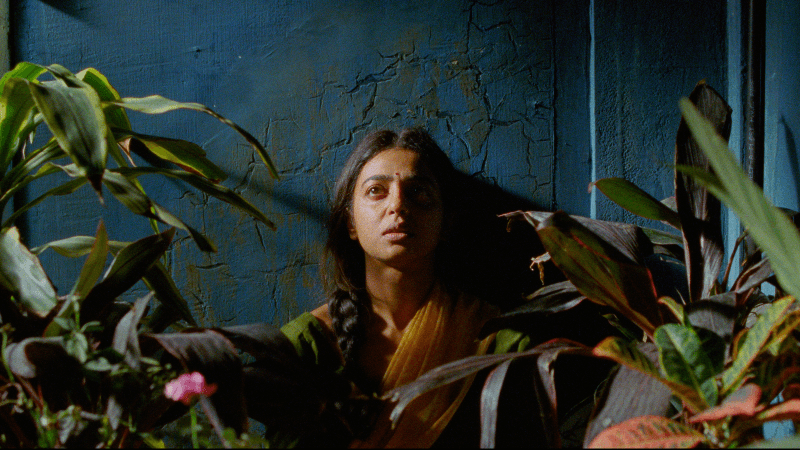
Sister Midnight follows Uma (a star turn from Radhika Apte), a young, recently-married woman who has just arrived in the city. The marriage is an arranged one, without any closeness. In the opening scene, as Uma begins to undress for bed, her husband Gopal (Ashok Pathak) runs out of their one-room house without a word. They met a few times as children, but as adults they’re strangers. An explanation of this strange coupling is explained by two gossipers at a cousin’s wedding: he’d already tried to marry every girl in the village, and no one wanted to marry her, so their families shoved them together. Not the love story most people dream of.
Sister Midnight explores, on some level, the horror of arranged marriage, enforced gender roles and the pain of an isolated existence. There’s a light touch to these themes, humour coming both from the sparse and sharp script and adept cinematography and editing, which together make for an engaging, compelling piece.
There’s no comedy without tragedy, and no one in the world of Sister Midnight is happy. The neighbors are bitter gossips, the elevator operator appears to be contemplating suicide, and when Uma takes a trip to the beach and stares out over the rippling waves, her brief tranquility is shattered by the sobs of those on either side of her. For most of the women, the days are made up of domestic labour and malaise. Sheetal (Chhaya Kadam), who Uma befriends by convenience and force, is a jaded presence. Her deadpan promises of “romance, adventure and excitement” on an afternoon walk amount to deciding whether to turn left, at the rubbish pile, or right, towards the bins.
This is all taken as given. There’s little to be happy about in these characters’ lives; when asked whether he’s sad, the operator simply says, “this is just how God painted my face”. It’s laugh-out-loud funny, but also emphasises the deterministic cycles characters are trapped in. There’s a resigned acceptance to life, with no view of how to change one’s circumstances. It’s a carefully constructed film in nearly all aspects, from the embrace of stillness and Apte’s ability to convey complex emotions without words to the use of colour and sound. Silence and noise, dark and light are consistently juxtaposed, bringing significant depth to what could be flimsy characters.
This is particularly strong in the first half. In the latter, although the technical aspects remain strong, the film loses itself a little, the central twist of the narrative not quite hanging together. The sudden absurdity is entertaining, but what begins as an impressively minimalistic approach becomes frustratingly limited. Some of Uma’s actions go unexplained, and the zero-to-one-hundred acceleration of the plot jars with the first act’s pacing. The filmmaking turns more experimental as time goes on, descending into a nightmarish, ambiguous state. Reluctantly accompanied by stop-motion animated animals, the non-conformist Uma truly forges her own way through a world that barely values her.
A lot is packed into the story, which means some ideas don’t get the attention they deserve. Not every risk pays off, but it’s hard to criticise a film so willing to take them. The attention to detail in direction, design and performance in Sister Midnight is excellent, and its comedy is well-balanced with surprisingly touching moments and a well-worn but salient message to be yourself.
★★★
In UK cinemas March 14th / Radhika Apte, Ashok Pathak, Chhaya Kadam, Smita Tambe, Subhash Chandra / Karan Kandhari / Altitude / 15
Discover more from
Subscribe to get the latest posts sent to your email.
About the Author