Nosferatu the Vampyre 4K Review (2025)

Any time a new version of Dracula comes around, it has something to prove. What, exactly, are we doing this time that hasn’t been done before, and why should we watch this one over all the others? Bela Lugosi has the iconic look and perfected the “vampire accent”. Francis Ford Coppola’s Bram Stoker’s Dracula had baroque grandiosity, lots of nudity and grand guignol gore (it’s so much fun). Werner Herzog‘s Nosferatu the Vampyre, a remake of the very first vampire movie, F.W. Murnau’s Nosferatu, has something quite special up its sleeve: perhaps the most sympathetic vampire in cinema.
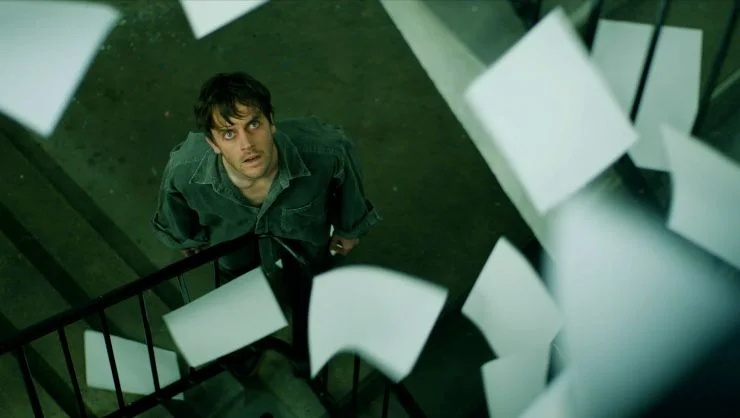
You all know the story. A young lawyer, Jonathan Harker, travels to Transylvania to meet a reclusive count who wants to buy a house in Harker’s hometown. The count, named Dracula – not Orlok this time – is a vampire. After preying on Harker and drinking his blood, Dracula sets out for Harker’s home to seek out his beautiful wife, Lucy, bringing a plague in his wake.
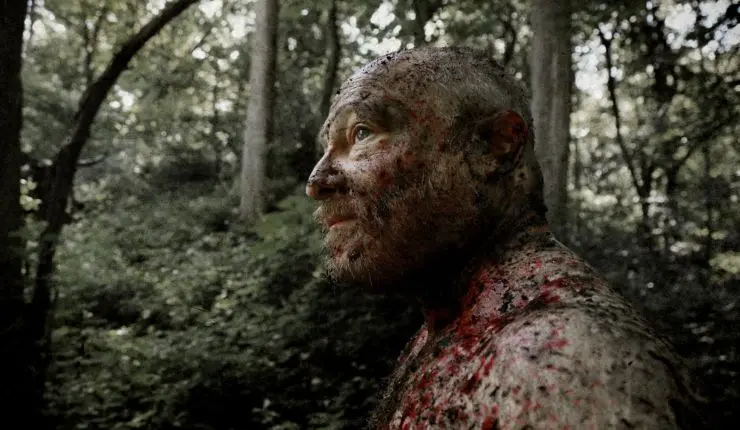
It is quite remarkable that a real-life monster like Klaus Kinski should deliver such a haunting, vulnerable version of one of cinema’s greatest horrors. Coppola’s version attempted to evoke sympathy with its doomed lovers, separated by centuries, but the movie was too preoccupied with its own style and sense of fun for it to really work. Herzog’s Nosferatu the Vampyre is much more pared-back, stripped to its simplest elements. It doesn’t have the visual dazzle of Coppola’s, but that allows the performances to shine through the greater. Kinski gives us a creature exhausted by centuries of eternal life, desperately lonely and grabbing at any chance of love.
You feel that this Dracula doesn’t want to drain people of their blood, but simply has no choice. He’s not evil any more than a predator animal is evil, he’s just doing what his nature demands he do. Compared to Robert Eggers’s 2024 Nosferatu, which really leaned into the monstrousness, there’s a really profound sadness here. You imagine it’s probably a relief for Dracula when he finally dies.
The film around Kinski is a fairly straightforward telling of the story, apart from the brilliant, nasty sting in its tail. Yes, most of the main beats will be familiar if you’ve either read or seen another version of Dracula, but that’s no bad thing. This story is a timeless classic for a reason. It’s bolstered by Herzog’s confident, unfussy direction that leaves Murnau’s German Expressionism behind and instead goes for comparative naturalism. Boldly, large chunks of the film happen in broad daylight, almost as though Herzog is challenging himself to find the frights.
And find them he does. In the scene where Dracula, uninvited, enters Lucy’s bedroom, we see it happen in Lucy’s mirror. Because vampires have no reflection, all we see is his shadow creeping over her shoulder – before he’s right there in the frame. It’s superb, genuinely chilling stuff, accentuated by Kinski’s stiff, unnatural movements. For all the sympathy he brings, he never lets you forget that he’s playing a walking corpse.
Murnau’s version is the original vampire movie, and Eggers’s got (and deserved) all the hype more recently, but Herzog’s Nosferatu the Vampyre is perhaps the best of the three. This is a striking, eerily beautiful retelling of the Dracula story, with one of the best vampires in cinema history backing it up.
★★★★
Released on 4K on September 22nd / Klaus Kinski, Isabelle Adjani, Bruno Ganz / Dir: Werner Herzog / BFI Releasing / 12
Discover more from
Subscribe to get the latest posts sent to your email.
About the Author