Major Star Meets Arthouse – Mainstream Actors in Indie Movies
Independent, arthouse and short films tend to be the starting point for many wanna-be actors. Once scouted out by their agents, break-through actors usually take that famous leap into Hollywood. Superhero movies, studio epics and Scorsese collaborations are where the major players are. But what happens when they go back to indie?
There are a few actors who have turned their backs on Hollywood completely. Elijah Wood, for example, now makes primarily indie flicks after leading one of the biggest franchises of all time (The Lord of the Rings Trilogy, dir. Peter Jackson, 2001-2003). But there are some stars that choose to do both. Not to be confused with actors who began in indie films – that’s probably a lot of them. But the ones who stayed there while still splashing the tabloids as Hollywood stars.
Here’s our list of famous who have appeared in indie/arthouse cinema:
Jake Gyllenhaal
Jake Gyllenhaal has had his fair share of fame. From apocalypse movies to cult classics, Gyllenhaal had dazzled the screen for decades – now the latest Marvel recruit in Spider-Man: Far from Home (dir. Jon Watts, 2019). But that doesn’t mean he’s left the indie world behind. In 2013, Gyllenhaal lead the quiet mystery thriller Enemy, directed by Denis Villeneuve. More recently, he collaborated with Paul Dano on his directional debut Wildlife (2018).
Robert Pattinson
After seeing the posters for hit teen franchise Twilight (2006-2012) bombard the streets, you probably wouldn’t expect to see Robert Pattinson grace the indie screens. However, the smouldering vampire has taken to the arthouse side of the industry, appearing in Good Time (dir. Josh and Benny Safdie, 2017), High Life (dir. Claire Denis, 2018) and The Childhood of a Leader (dir. Brady Corbet, 2015). His latest avant-garde performance is set to premier this October, starring alongside Willem Dafoe in The Lighthouse (dir. Robert Eggers, 2019).

Edward Norton
A year prior to the extreme success of Fight Club (dir. David Fincher, 1999), Edward Norton starred in the low-budget crime movie American History X. Looking almost like it was taped on a VCR, director Tony Kaye took a less formalized approach to filming. Norton plays an ex-Nazi jailbird vowing to change his ways, having set a bad example for his younger brother. Raw and inventive, American History X certainly stands out in Norton’s filmography.
Daniel Radcliffe
After being the most famous kid in cinema, it’s understandable that Daniel Radcliffe chose to step back from the big screen. Following the Harry Potter series (2001-2011), Radcliffe appeared in some smaller movies, alongside mainstream ones. The delightfully inventive comedy Swiss Army Man (dir. Daniel Kwan and Daniel Scheinert, 2016) followed on from his more dramatic performance in Kill Your Darlings (dir. John Krokidas, 2013). Though still young, Radcliffe’s tastes have already proven varied; from blockbuster to avant-garde, Radcliffe seems up for it all.

Ryan Gosling
An immeasurable amount of people is still swooning over Ryan Gosling in The Notebook (dir. Nick Cassavetes, 2004). Whether he’s dancing away in La La Land (dir. Damien Chazelle, 2016) or defeating baddies in Blade Runner: 2049 (dir. Denis Villeneuve, 2017), Gosling is a guaranteed money-maker for big studios. However, Gosling also has some poignant independents on his filmography. Most notably Blue Valentine (dir. Derek Cianfrance, 2011), Drive (dir. Nicolas Winding Refn, 2011) and Half Nelson (dir. Ryan Fleck, 2006). Here we get to see a different side to Gosling, not always being the eye-candy such as in the 2007 movie Lars and the Real Girl (dir. Craig Gillespie, 2007).

Nicholas Cage
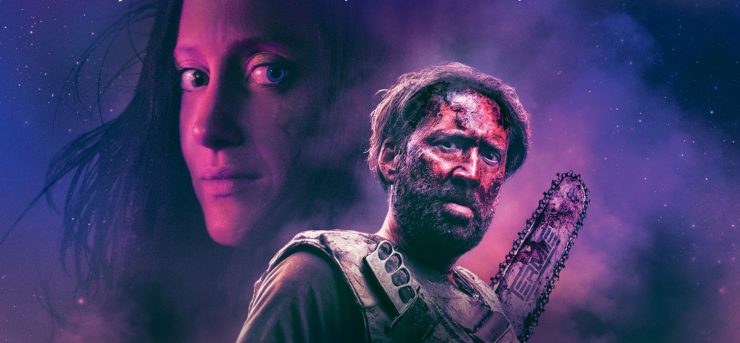
Talking of arthouse, the National Treasure (dir. Jon Turteltaub, 2004-2007) adventurer is the last person you’d expect to see in Panos Cosmatos’s hallucinogenic thriller movie Mandy (2018). When a sadistic cult invades Cage’s isolated home, he launches into a vengeful manhunt. The neon lighting and stylized cinematography makes a sharp contrast when compared to his earlier work in Face/Off (dir. John Woo, 1997) and Ghost Rider (dir. Mark Steven Johnson, 2007). But it was a buzz for the festivals, flexing Cage’s talent for emotive acting.
Michael Fassbender
Michael Fassbender may be known as the metal-manipulating X-Men villain, but that doesn’t mean he doesn’t enjoy an indie flick too. Hunger (2008) and Shame (2011) are two incredible collaborations with director Steve McQueen, far from the action-packed adventures of Assassins Creed (dir. Justin Kurzel, 2016). Not to mention Fassbenders eccentric, paper-mâché performance in indie gem Frank (dir. Lenny Abrahamson, 2014).
Brad Pitt
Quintin Tarantino’s latest hit Once Upon a Time in Hollywood (2029) screams the opposite to low-budget indie films. As is Brad Pitt’s new space epic Ad Astra (dir. James Gray, 2019). Yet, Pitt still manages to squeeze in some artier movies. The Tree of Life (dir. Terrence Malick, 2011) and Babel (dir. Alejandro González Iñárritu, 2006) both experiment with the artform without adhering to mainstream audiences. Similarly, Pitts unexpected appearance in the British, rough-and-ready gangster movie Snatch (dir. Guy Richie, 2000) is definitely against typecast. The Assassination of Jesse James by the Coward Robert Ford (dir. Andrew Dominik, 2007) is – as you can probably deduce from the overly long title – not exactly Marvel entertainment. But Pitt successfully bounces between arthouse and mainstream, proving to be more than just a pretty face.

Discover more from
Subscribe to get the latest posts sent to your email.
About the Author