Last Girl Standing Interview – Ben Moody & Rachel Moody
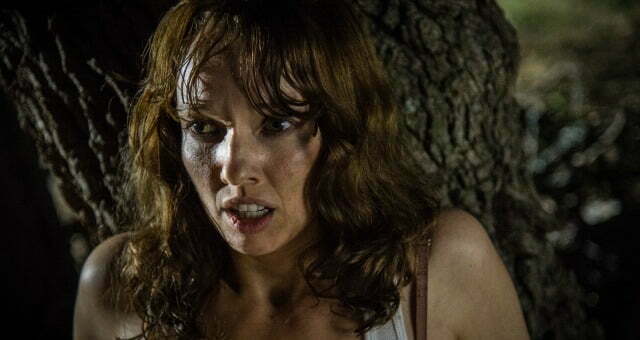
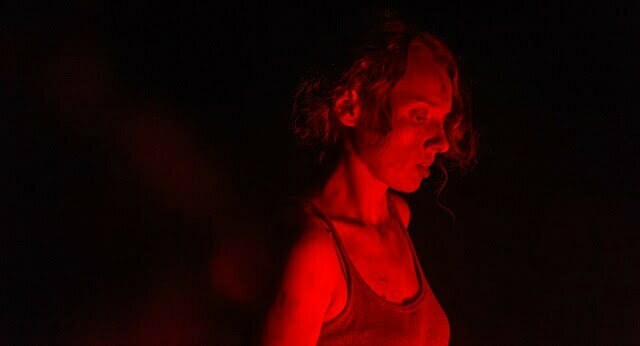
To support the Digital HD and VOD release of Last Girl Standing (FrightFest Presents, 29th February) we have an interview with director Ben Moody and producer Rachel Moody.
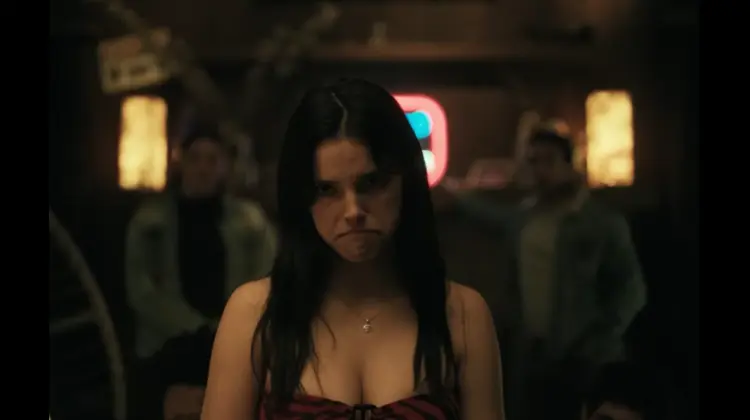
Last Girl Standing – Five years ago, a masked killer brutally murdered a group of friends. Since then, Camryn (Akasha Villalobos), the lone survivor, has struggled to reclaim her shattered life. Wracked with guilt and paranoia, Camryn leads a depressingly lonely existence until Nick (Brian Villalobos), a new co-worker, befriends Camryn and attempts to integrate her into his group of friends. Just when she might be ready to start a new life, Camryn’s past comes back to haunt her. Can Camryn ever have a life again, or is she destined to be alone? Part slasher movie, part character study, Last Girl Standing is a penetrating and intimate look at what happens to the survivors of horror movies.
- What made you choose the subject of survival / aftermath as a subject?
BENJAMIN R MOODY (BRM): A combination of inspiration and circumstance. After funding on a bigger film never came through, we decided to focus on something we could self-fund. We kept trying to come up with the classic, one location, first-time horror film setting but nothing spoke to us. I couldn’t find my “voice” in any of it. I love watching that stuff, but I personally couldn’t find anything inspiring to do with it.
It was a week after our son was born, Rachel (producer/wife) and I were stuck at home learning how to be parents and watching non-stop horror movies (new parents do that, right?). In between films, we turned on a slasher marathon already happening on TV and we caught the very end of one. It was a movie I’d seen before, but coming into it at the end with the girl screaming and laughing because she survived, I immediately turned to Rachel and said, “What happens to her now? I’d be so traumatized after that.” We couldn’t stop talking about it that night.
I think I came up with the general tone and story in that first 45 minutes of talking about it. It was more dramatic and subdued (which meant it was something we could probably make on our own dime). It was something we didn’t feel had been explored that much or at least in the way we wanted to explore it. But most importantly, it was something I could find my “voice” in. Unfortunately, horrible things happen all the time, so I think the very idea of surviving and dealing with trauma is something everyone can relate to. I also hate turning on the news and seeing the same bad news happen over and over again. Which got me thinking about horror movies, especially franchises, where basically the same thing happens every time. I suddenly found something worthwhile to explore.
RACHEL MOODY (RM): This is a subject that has always been of interest to us. Over the years, we’ve discussed different story ideas that deal the idea of “what happens after” a traumatic event, but never settled on one that really felt right until Last Girl Standing. I think it’s an intriguing concept because throughout history humans have had to overcome horrific, tragic situations, and I can’t help but wonder how that changes a person. How can they keep living if they’ve lost everything? By using the final girl trope as our entry point and following the conventions of a slasher film, I think we were able to comment on survival and PTSD in an interesting way.
- What was the greatest challenge you each faced in the production of Last Girl Standing?
BRM: What do you want? A location falling through? Us being chased off by a tornado? Or a crew member being attacked by a opossum? It was a zero budget movie. I think the only time things weren’t challenging, for me at least, were when the camera was rolling. Everything in between takes was simply crazy. It was a skeleton crew. Maybe even smaller than a skeleton crew. The only reason it worked was because it was a bunch of people I trusted and had been working together for a couple years.
RM: For me, the biggest challenge was that I wasn’t able to be on location during filming. We had a son who was around 6-months-old during production and I couldn’t be away from him for long periods of time. Ben and I have a certain unspoken workflow on a production because we have done over 20 short films together. We each know what we are responsible for and when to help the other person out without ever having to ask for it. So, when we realized that I couldn’t be on location, it made us both nervous. Of course, we had a wonderful crew and everyone filled in 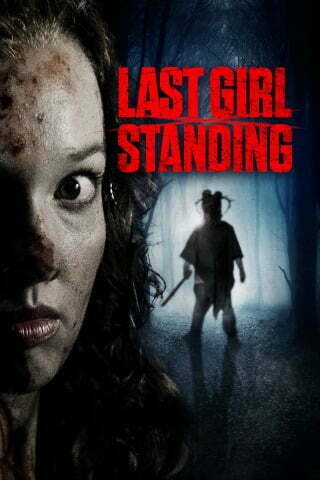 where needed. Not that it wasn’t stressful, but we survived and we’re all really proud of the outcome.
- Subverting expectation in horror isn’t an easy thing to achieve although Last Girl Standing seems to do it very well – are there any other typical tropes you dislike in horror and seek to challenge?
BRM: In relation to Last Girl Standing, I was trying to be the most mindful of women in horror and not being overtly meta. Ever since Scream, it’s sort of become a trope to be self-aware within the movie itself. When done with a purpose and affection like Scream or Cabin in the Woods, I think it can be amazing. But I often feel like it’s done for no reason or worse … the filmmakers look down on the genre and are thumbing their nose at it. We felt our core concept was inherently meta, we’re looking at the aftermath of a girl who survived the events of a horror movie. Rachel and I were instantly in agreement that there should never be some character that discovers our main character’s backstory and is like, “Oh snap. You’re that chick that survived that horror movie! You’re like a real life Jamie Lee Curtis!” That hyperaware angle and presentation of this story never interested me.
Additionally, we were also playing with women in horror and ultimately the “Final Girl” trope. I had no real big agenda of stating girls are “strong” and can do whatever guys do or anything like that. All I set out to do was make normal, not hyper-sexualized female characters.
RM: I honestly think the same tropes I dislike in horror carryover to all genres of films – lack of fully-developed characters, especially in regard to women and minorities. Slashers are notorious for stereotypical casting – the jock, the sexy girl, the stoner, the smart/nerdy girl etc. I love when a movie like Cabin the Woods can turn that upside-down, but a movie like that is few and far between. I’m extremely proud that so many people have appreciated how realistic all the characters in Last Girl Standing are and I think that is because we put characters first.
- What horror films do you think influenced you the most when making Last Girl Standing?
BRM: I absolutely love and adore the original Texas Chainsaw Massacre and to me that is probably the most iconic example of the lone girl surviving by the skin of her teeth. I showed it to some cast members who hadn’t seen it before and it was still a powerful and still a visceral experience for them almost 40 years later.
Growing up near a Crystal Lake in Maine, I was always a Jason guy so the Friday the 13th films were hugely influential. I had all these Friday the 13th expanded universe books that I would devour as a kid. Jason was in my blood. Then you have Halloween, Sleepaway Camp and The Burning. We also looked at Scream and how it completely rejuvenated the slasher genre. Not to try and revolutionize the genre like it did, but more along the lines of what it added to the genre and how it changed people’s way of watching it.
One of the biggest influences though wasn’t a horror movie. It was the Brie Larson movie, Short Term 12. I really wanted to bring that “low fi” dramatic realism to the slasher genre. I have no idea if anyone else wants to watch that, but I did so I hope there’s at least a couple others out there that might.
RM: The slasher genre as a whole has always been one of my favorites. I think the Friday the 13th series was definitely the one I watched the most growing up. What I loved about Ben’s script is that his knowledge of slasher movies, and horror in general, really comes through. One of the themes of Last Girl Standing is repetition. I mean, how many times do we need to see a group of college kids going to the woods and get picked off one-by-one? But horror fans, myself included, love it and continue to watch every new iteration on that idea. Ben really tapped into that with Last Girl Standing and I hope it’s something genre fans will appreciated as much as I do.
- How do you find working together and do you think it makes it easier working as director/producer as man and wife?
BRM: In the world of independent film, I can’t imagine not working as a husband and wife team. We’ve been together about 12 years now and been working on films together for about 8 of them. At this point in our careers, film is 24/7. It takes so much time, energy and dedication to get a film made that I just can’t fathom not having your collaborator in the house to bounce ideas off at all times of the day. We have a shorthand way of communicating and understand each other’s strengths and weaknesses. Film also isn’t as glamorous as people think it is. You gotta fight for a year sometimes two for 15 days on set of moviemaking. There’s a lot of highs and lows that come with that. We’re pretty good about if one of us is down the other is there to pick them up. I can’t imagine not having that.
RM: I guess some people would think we’re crazy, but it is the best partnership. When we need to talk about something, we can do it instantly … no need for texts or emails. This helps us get things done quickly, which is so important in indie filmmaking. And, we aren’t the type of people whose brain “turns off,” so we are always talking about ideas and working through projects at the dinner table, in the car, everywhere. It just works for us and it’s also fun. We can collaborate together and make something we both can feel proud of.
- Rachel – it’s Women in Horror Month – do you ever feel challenged working as a woman in the industry? Would you ever like to go in front of the camera?
RM: My experience is limited to working with Ben and in our production company Blue Goggles Films, so I haven’t had any personal challenges as a woman in this industry. The people we work with in Austin, TX are amazing. The have only shown me respect and I feel very blessed for that because I know that isn’t the case for all women in this, or any, industry for that matter.
As for acting, there is no way you’ll catch me in front of the camera! I actually was supposed to be in one of the shots in Last Girl Standing, but Ben kindly cut around me because he knew how much I hate being onscreen. I am an extra in the bar scene and I played a zombie in one of our shorts. That the most you’ll ever see of me on our productions.
- Do you have any favourite scream queens? Was the character Camryn modelled on anyone in particular?
BRM: She wasn’t really modeled after anyone specifically. She’s more inspired by the collected experiences of the survivors of all slasher movies. But if I had to name a few of my favorites, I’d go Marilyn Burns, Dana Kimmell and Felissa Rose. How many horror movies does it take to become a “scream queen?”
RM: Camryn wasn’t modelled on any one character. We felt it important that she represent the trope of the final girl without being too specific. As for my favorite scream queen, it would have to be Jamie Lee Curtis. I always watch Halloween in October (usually on Halloween night), and she’s the quintessential scream queen for me.
- Discounting horror movies with endless sequels, are there any horror heroines you really want to know what happens to after the movie ends?
BRM: Off the top of my head I think of Juliette Lewis in From Dusk Till Dawn. But then I remember they made sequels and a show. But screw it, she never came back to the role. I want to see where Juliette Lewis’ version of that character is now, 20 years later.
RM: I’ll let Ben take that question!
- What is next on the horizon for you both?
BRM: We have a very grungy, present day sci-fi horror feature in the works. I know that’s a long description, but when you use the term “science fiction” a lot of people think, “Future. Space. Clean white rooms, got it!” Our’s is the opposite of all that. Rachel and I have been working together on the story and feel the similar spark we did when we first started working on Last Girl Standing. We’re super excited about it.
RM: We are developing our next feature film. It’s still in the early-stages, but true to form, we are spending all our free time working out the story beat-by-beat. I’m really excited about this idea, but we can’t say too much about it yet!
Last Girl Standing comes to Digital Download and VOD from 29th February.
Discover more from
Subscribe to get the latest posts sent to your email.
About the Author