Celtic Utopia Review (Locarno Film Festival 2025)
Irish contemporary history is one of a kind; straightforward and painfully clear. As post-colonial residue pervades daily life, and national heritage slips through the hands of a younger generation, the conflict remains vivid. For those unfamiliar with the island’s deep fractures, music continues to carry much of its memory and unrest.
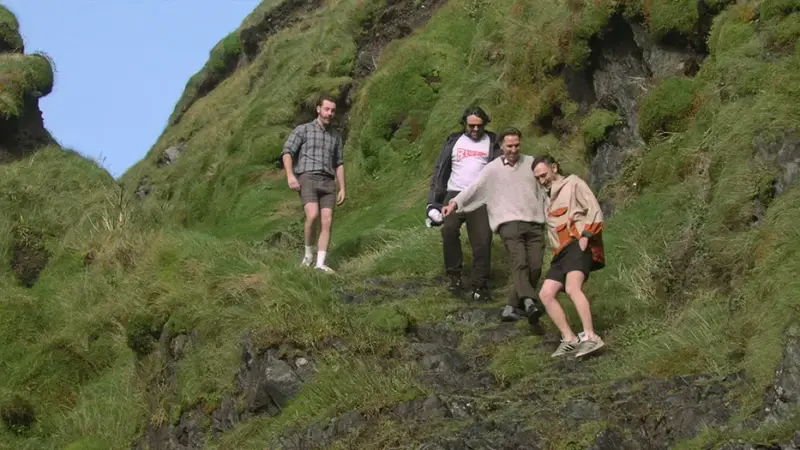
In Celtic Utopia, directors Dennis Harvey and Lars Lovén travel across Ireland, guided not by political commentary but by the voices of young musicians who pick up their instruments and sing into the stillness left by history. From the border town of Dundalk to Donegal and Belfast, artists open their van doors, climb coastal cliffs, and find makeshift stages in empty chapels and bar-backyards. They sing of the scars that followed the Good Friday Agreement of 1998. Peace may have been declared, but the promise has not been quite delivered, and resolution has not yet arrived.
Their music, raw and defiant, is sentimental, most likely, and decisive, most certainly. They are bridging gaps in post-shame attempts of declaration. The featured artists and bands, including The Mary Wallopers, The Deadlians, Young Spencer, and Rising Damp, are not simply reviving Irish folk. They are folding it back into their lives, reshaping it at the threshold of punk, hip hop, and spoken word. Language, especially the fragile survival of Gaelic, acts as both a symbol and an entry point to a wider confrontation with identity. It resists erasure, not only from British colonial policy but also (to borrow from the words of an appearing artist) from the homogenising logic of global capitalism.
Celtic Utopia unrolls as a ballad-tour of unfinished stories and reoccupied traditions. Part catalogue, part field recording, part archival meditation, the film blends performance, speech, and past footage of regional trauma with restraint. It avoids overt positioning. What emerges is something observational and respectful (following the Irish tradition), a reminder of what musical documentaries can be when they resist genre conventions and let the texture of daily felt life surface.
Harvey and Lovén gently craft a picture as they travel along a rhythm of collective endurance and gentle provocation. While the documentary occasionally glides over deeper political contexts, it compensates with atmosphere and proximity. By the end, what remains is not a conclusion but a sensation; that cultural survival is messy, that heritage often bears contradiction, and that music, while not redemptive, can be a vessel for dignity, defiance, and belonging. One idea lingers: that it is possible to love a place that has not made space for you. And that art, in its simplest form, can help you remain.
Celtic Utopia had its world premiere at the Locarno Film Festival 2025, as part of Semaine de la Critique.
Celtic Utopia (Útóipe Cheilteach) / Dir: Dennis Harvey, Lars Lovén / Cinematography: Tuva Björk, Jamie Goldrick / Editing: Dominika Daubenbüchel / Production: MDEMC / Sweden, Ireland
Discover more from
Subscribe to get the latest posts sent to your email.
About the Author