28 Years Later: The Bone Temple Review
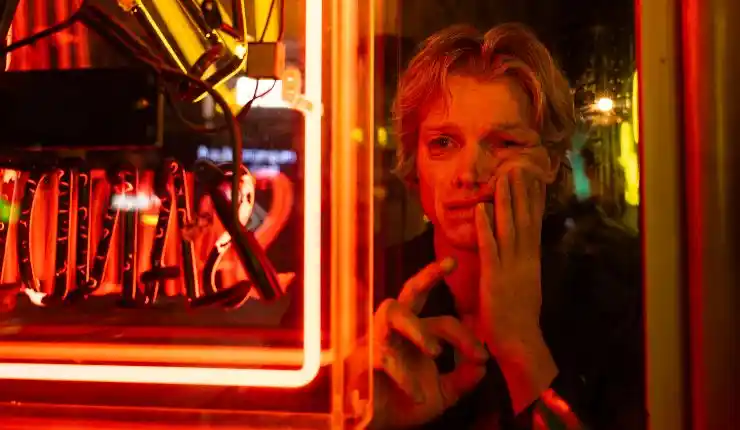
The bar for this year’s batch of horror movies had been set high well before the chimes of Big Ben welcomed in 2026. The likes of Sinners, Weapons and The Long Walk weren’t just strong examples of the genre – they were simply great films. But that bar is about to go stratospheric with the arrival of a film that’s on every “most anticipated” list for this year. 28 Years Later: The Bone Temple is first out of the horror blocks and will take some beating.
Set immediately after the events of 28 Years Later (2025), this sequel was filmed back-to-back with its predecessor for financial reasons, yet it’s turned out to be a creative plus point. The immediacy and urgency of the previous outing remains intact, and taps into what memory you have of the film. This time the narrative is split into two parallel storylines which only converge in the last half hour. One takes us back to Doctor Kelson (Ralph Fiennes) and his experiments to treat or totally halt the virus which is still ravaging the mainland. The other sees young Spike (Alfie Williams), the survivor of the horrors of the previous film, being initiated into Sir Jimmy Crystal’s (Jack O’Connell) Satanic cult and quickly growing disillusioned with both the man and its rituals. It’s a living nightmare: Crystal’s grip on his group of feral teenagers is like iron and escape is little more than a dream.
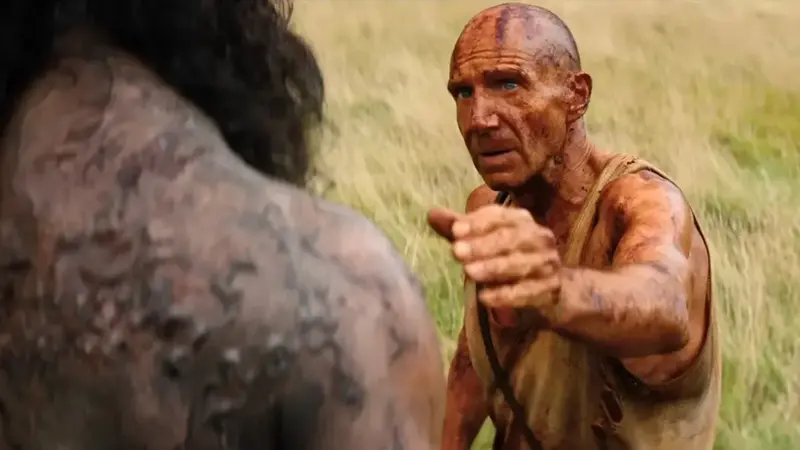
We’re still in the post-apocalyptic setting from the 2002 original but, in 28 Years Later: The Bone Temple, the focus is now less on the marauding infected and graphic depictions of their attacks. They’re still essential to the story, but no longer the all-pervasive antagonists we remember. Instead, our attention is concentrated on just one of them, the man mountain Samson (Chi Lewis-Parry), covered in welts and scars, near mute and with an especially shocking way of decapitating anything he regards as prey. But there is more going on underneath, all of which emerges when Kelson starts experimenting with herbal medicines to initially modify his behaviour and, ultimately, stop the virus in its tracks. The unlikely but growing relationship between the two is fascinating and gives us the few touching moments in the film.
While the Kelson/Samson storyline demonstrates that the surviving humans are still capable of compassion and caring, in the assured directorial hands of Nia DaCosta, who replaces Danny Boyle for this instalment, it’s evil that gets pride of place. Crystal’s manipulation of the teenagers in his thrall brings a darkly disturbing tone to proceedings. His physical resemblance to another Sir Jimmy of ill repute – clad in a track suit with chunky jewellery, shoulder length blonde hair and with a catch phrase of “How’s that?” – is disconcerting to say the least. For O’Connell, it’s the chance to build on what we saw of the character in the previous film and he grabs it voraciously with both hands. He makes your skin crawl.
28 Years Later: The Bone Temple allows DaCosta to indulge her love of powerful visual images, from the Khmer Rouge-like memorial of bleached white skulls to murmurations of birds spread across the sky. Even though the religious imagery in the latter stages – Jimmy’s comeuppance ironically reflects the cross he wears round his neck but also the Romans’ equally ironic execution of Saint Peter – seems a little heavy handed, it’s not out of place in such a lurid, gripping and gut-punching environment. With a third, and Danny Boyle-directed, instalment in the works, it’s no surprise that the final moments of this film are open ended, nor is it any spoiler to say that we’re given something of an answer to the perennial Cillian Murphy question. Bettering a sequel that is as least as good as the original is a daunting and intriguing prospect. We can’t wait.
★★★★
In cinemas from January 16th / Ralph Fiennes, Jack O’Connell, Alfie Williams, Emma Laird, Chi Lewis-Perry, Robert Rhodes, Erin Kellyman, Louis Ashbourne Serkis / Dir: Nia DaCosta / Sony Pictures / 18
Discover more from
Subscribe to get the latest posts sent to your email.
About the Author