The Reflecting Skin – Philip Ridley Interview
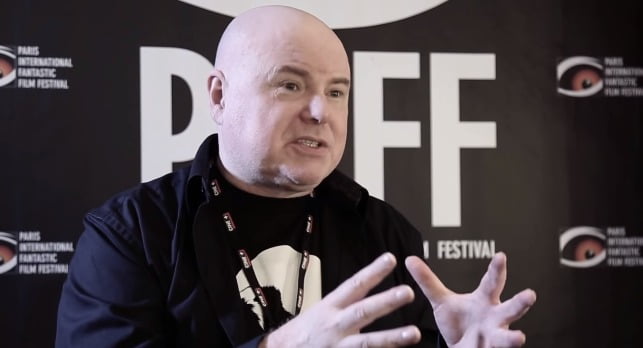
Philip Ridley may have only made 3 feature films in the space of 25 years but he has made three of the most striking and original films in recent decades. His debut and best film The Reflecting Skin has recently came out in a new Blu-Ray edition thanks to the lovely folks at Soda Pictures. So Ian Schultz gave Philip Ridley a ring to talk about the new release, his influences, what he is working on etc.
IS: Obviously, The Reflecting Skin hasn’t been available for a long time and now it’s out in a proper format. How does it feel for it to have this second life a nd to be available after all these really horrible versions that have been out over the years?
Well, it feels like a kind of minor miracle, to be honest, because The Reflecting Skin was never a huge, mainstream commercial film. And even with films that get a huge, mainstream release and are loved and cared for by big studios afterwards, a lot of the elements and the original negs and all those still get lost. So it was amazing to me that we were able to find enough material and get through to editor that still worked that made it possible to even restore the film. And Soda and everyone have done an incredible job in hunting out all the best kind of pieces of the film that they could to reconstruct the film exactly as it was. So just purely on a technical level, it’s a miracle, just to get all those elements back together. And just emotionally to have it back out there again is fantastically exciting, just to see it again and to get the film not just being seen, but seen as it should be seen—because as you’ve said, the versions of how it was seen before were horrific, to say the least.
I’ve got the Echo Bridge DVD upstairs somewhere, and that was the firsttime I’d seen it when it finally came out, and it was … you could still see that it was a really great film, but it was such a horrible VHS transfer.
Oh, no doubt. Most of the releases of the film were done separate from me, so I wasn’t part of that. And what happens with a lot of these places is they go out to other territories and they go out to other distributors, and then they look at the print and they kind of think, “oh, this is so extreme, it must be a mistake—let’s re-grade it.” So you had a lot of that going on, with people not realising that the intense look of the film, the saturation of the colours, was intentional. And so getting rid of all that so it kind of panned out to a muted, um, a muted realism. Which, of course—realism is the last thing the film is about!
So what were the specific barriers to the re-release of the film, and how were these resolved? I know that a lot of different companies have owned it over the years…
Yeah, that’s right. I don’t know all the ins and outs, but I think there were issues in terms of the original materials. I think it’s been a gradual process of various different territories becoming more and more interested in the film. One of the things that’s been an interesting story in terms of The Reflecting Skin is the Internet, really, in the way that the Internet has almost kind of created a new following for the film. Clips started to be uploaded. I don’t know where people got them from, but clips, little kinds of sections from the film, started over the years have been uploaded. And a kind of cult fan base has gradually become bigger and bigger around them, until that in of itself reached a kind of tipping point. And that’s fantastic, because that’s an example of a film really finding an audience—because no one quite knew what to do with the film when it first came out, it didn’t fit easily into any category. They couldn’t kind of put a strapline on it it that made sense. Was it a horror film, was it a comedy was it a domestic drama?
I would call it a fantasy film, in a way…
I think you’re right, I think it is – I think it is a fantasy film. It’s much more in the tradition of Ray Bradbury, “Dandelion Wine,” and all those kind of things, It’s a fantasy film, but it’s a fantasy film that plays really deliberately with genre. So it uses quotes from genre horror films, and it uses the language of the thriller, and it uses the language of a love story, it plays with genres. And I think in 1990 that was very difficult for people to get their heads around.
There’s that great bit in the documentary where it plays at Cannes, and there’s someone told you, one of the critics said “the film already has a cult.” That was brilliant.
Yes [laughs]. I mean, that was literally said at the press screening as I crossed the foyer to go to the press screening. It was two minutes after the film has finished! It got a really extreme reaction What happened at the screening was the exploding frog sequence happened at the beginning, and half the audience got up and left—they just marched out in outrage earlier. I think because the opening of the film deliberately dupes you into thinking you’re going to watch Little House on the Prairie, and then it suddenly becomes The Texas Chainsaw Massacre with reptiles. And um, half the audience left. But what happened was that obviously that half of that audience that left went outside on the causette and was talking to everyone about this outrageous film, and more and more people started to come in. And we ended that screening with more people inside than we had at the beginning—there were people standing up at the back! Because of those half, because of the 50 percent of the audience that had left, word of mouth had gotten around in about the space of an hour. And we were playing to almost twice the capacity, So that’s what that journalist, that critic wasreferring to—that the word had got out pretty quick.
Do you think the film has had any influence on other filmmakers? I think the film Ryan Gosling did, Lost River, is pretty similar…
Yeah, I mean, it’s not for me to say really… But people keep on, I meet lots of younger directors who tell me they have seen the film and it’s a film they admire very much. So it’s kind of, I think the kind of hyper, the relentless visual overload, which is what The Reflecting Skin is about—it’s just relentless, this image after image a kind of visual hysteria almost—I’ve seen traces of that in quite a few films since. But then again, that’s for others to say, rather than me, really.
Speaking of other films, did you ever see Tideland, and did you see any similarities between both films?
[Laughs] Ooh, that’s not for me to say really! But yes, I did see Tideland, and it’s an interesting comparison really…
I asked the writer once, and he loves the film, he loves The Reflecting Skin, and… but I think it’s more that you guys were looking at the same stuff, to be honest.
PR: It might be. I know that that’s the case, when The Reflecting Skin first came out, for example, there were one or two references that were made that “it’s like this and it’s like that,” but I think you’re right it’s more like if you draw from the same sources, or you’re inspired by the same sources, it’s not necessarily one film copying another. Rather it’s, as you say, both directors and writers are inspired by the same source material.
And that also has had a very rough time for years, Tideland…
You know what it’s like—anything that doesn’t fit easily into the categories, or can’t kind of break box office records in the first weekend, those kinds of films are struggling now. It’s very difficult to release something, it’s very difficult to get something made from the outset, that’s not like something else. The way to get a film made now, the easiest way to get a film made now if you go in with a hit book, or you go in with a true story or you go in with a stage play that you want to film. To go in with an original screenplay that you can’t sit there and say and ”this is exactly like that film bla-bla that came out two years ago,” so everyone can go “oh, I know what you’re going to make,” you know, that’s really difficult now. Which is a shame, because it’s robbing us of what was always the huge greenhouse of ideas, it was the oxygen-making greenhouse of ideas, was a really healthy arthouse.
So—is Passion of Darkly Noon ever going to really come out over here again?
PR: Well, you know, that is completely out of my control, which is the sad thing about filmmaking. It’s, as I say, it’s by a miracle that it’s happened with The Reflecting Skin. Sometimes films either come out or they don’t come out, and it has nothing to do with the quality of the film, it doesn’t even to do with how many people actually want to see it. It’s jut that the contracts behind the film have got so complicated, or were so complicated right from the beginning, that with the passing of time people just can’t work out who owns the rights or who owns what. I mean, bear in mind that the first two films I made, both The Reflecting Skin and The Passion of Darkly Noon, none of the contracts included a DVD or Blu-Ray. So that becomes a problem in of itself sometimes. So who knows? It’s up to the people, whoever they are, that now own the rights to get that ball rolling in this country. I wish it would, you know, because it’s a film that in many ways that I get asked about even more than The Reflecting Skin in some quarters, so it would be great to get it out there graded it should look.
So how did Viggo Mortensen come aboard—he’s fantastic, he’s absolutely wonderful in both films—and how do you feel about his sort of career ascent, because he’s obviously kind of blossomed as an extraordinary actor.
Well, I mean, Viggo was always a star—I auditioned him in 1989 when I was doing The Reflecting Skin, and he hadn’t really done anything so he didn’t come with any back catalogue or anything, and he just walked to my hotel room where I doing the auditions in Los Angeles, and you just knew that a major talent was in your presence. I mean, he was just phenomenal. Right from the outset he was, for me, one of the greatest actors I had ever met. He was charismatic, he was intelligent, and we shared lots of things because we are both interested in exploring different media. And as you know, Viggo is also a painter and poet and a musician and all of these different things. So we got on very well. He understood right from the first, right from the get go Viggo understood what I was trying to do with The Reflecting Skin when I was saying “it’s not about realism, it’s a kind of remembered fantasy of childhood; it’s being told by an unreliable, possibly psychotic narrator; objects are used symbolically; there’s this huge kind of nightmare journey through one mythical childhood—but I still want you to play it as Cameron, I want you to play it absolutely for real. I don’t want you to to do a kind of nudge-nudge wink-wink performance where you’re signalling to the audience that you think it’s weird, I want you to play it absolutely straight.” And he understood that completely. And the actors that are playing it straight in the film—like what Viggo is doing what Lindsay Duncan is doing—do a remarkable job of almost blinkering themselves to what I was getting up to with the camera, and just really playing it like a really true love story.
Are you working on anything new at the moment?
Well, I’ve just started writing my new stage play, and I’ve just finished a sequence of songs that I’ve been working on with Nick Bicat who’s been my regular collaborator ever since The Reflecting Skin. He did the music for The Reflecting Skin and Darkly Noon, and he wrote a sequence of songs for Heartless, the third film, when that came out. So I’m doing that, and I’m working on a sequence of Polaroid photographs of the weeds in my garden. So that’s the… that’s what I’m up to at the moment.
Have you ever considered doing any of your plays as films, or is that just a different medium which you don’t want to adapt for film?
I don’t see how they would work, to be honest. I mean, there’s been offers—in fact, “Mercury Fur” was playing in New York earlier this year and there was quite a few film offers to start developing it as a film. And I decided I didn’t want to pursue any of them, because I can’t see how the stage plays work as films. If I thought they could work as films, I would have written them as a film, you know? The stage plays for the most part tell their story in a very different way, and one of the ways that they tell their story is that they’re about claustrophobia. They’re about locking an audience in a room with a group of people, and having something, having a story reveal itself in real time with those people in the audience feeling like they’re participants in the action somehow, or at least implicit in the action. And film works in a very different way, you know. So I don’t see how they can work as film, so I’ve turned down ever overture to have them filmed so far, I’d like to have them remain as experiences in the theatre.
The other thing that worries me about cinema is that if you make a film of something, it tends to be seen as the definitive statement on that thing, you know what I mean? If you make a film of a stage play, or if I was to film one of the stage plays, everyone would assume that that’s how it should be done and that’s definitive. Whereas the glory—or at least one of the most exciting things about a stage play is that it’s a collaboration with every new director and every new theatre company that wants to do it. So each one makes it their own and reinterprets the text. So I don’t want to make anything that’s a definitive statement. With film it’s different, because you only veer get one stab at doing it, so by definition that’s the definitive statement.
What other filmmakers and artists have been influential, and have you seen any films or anything recently that you like?
Well, the artists who have influenced me have been the ones I have been living with for years, in many ways. There are a lot of them that are not visual artists—I mean, the composer Shostakovich has been a huge influence. Hitchcock, cinematically—I mean, Hitchcock was the first film director that I can remember being completely obsessed by. The BBC, BBC 2 when I was growing up, I must have been 12 or 13, something like that, BBC 2 had two Hitchcock films every Saturday night. It was in those days that the BBC did “seasons” of directors’ work. And every Saturday night the BBC showed two Hitchcock films, and I remember seeing Psycho for the first time in that season and becoming absolutely obsessed—just obsessed with how he worked out certain shots and what lenses and things were filmed on, the shower scene and all of that, and just reading… These were the days when you couldn’t run out the next day and buy the DVD. You saw something on telly and that was it, you didn’t see it again. So Hitchcock has been there right from the beginning. David Cronenberg is a filmmaker that I absolutely adore. The writer J.G. Ballard has been a huge influence, and I’ve always got one of his books.
I do too often, I’m a big fan as well.
Yeah, I just kind of—oh, just wonderful, so sparkling, more ideas on one page than most books have in 5600, so… those kinds of things. And going to art school as well, painters like de Chirico and Paul Klee, all of these kind of people have been – a whole mish-mash of influences really. I don’t know the American artist Joseph Cornell, but Joseph Cornell was a huge influence on The Reflecting Skin.
He definitely rings a bell…
If you look him up, he did little boxes, little boxes with things inside, like little stage sets, and all of the—I remember when we were doing The Reflecting Skin, we were doing props at Dolphin Blue’s house, and I said “look, every table surface and every shelf has got to look like a Joseph Cornell piece of art, each kind of still life that I cut to for the cutaways has got to tell a story in of itself. And that’s why they’re all full of these kind of predator skulls like sharks and piranhas, photographs and shells, dried flowers.
Speaking of J.G, Ballard, have you seen High-Rise yet?
No I haven’t, I can’t wait!
It’s fantastic, I’ve seen it twice.
Oh, lucky you.
It’s the best adaptation of any of his books by far.
Yeah, I can’t wait to see that—a good version of that is exactly what I’ve been waiting for.
And I’ve always thought that Ben Wheatley was an interesting director, I thought A Field in England was quite good, but he kind of got the great film of his career, finally.
You know, in making film, a film is a process, like really any work of art, a lot of it is just that moment when all the planets line up, isn’t it? It’s the right project at the right time, with the right people, release at the right time. You know, all of those kind of things.
So Heartless was the first film that was released direct to DVD, download and theatrically. What do you think of that as a model?
You know, I was really excited by that right at the beginning—I was excited by that when it was not the “in” thing to be excited by [laughs]. It’s become more accepted now. I think it’s by far… not by far… I think it’s a way that we are going to be, really. I think there has to be, there are so many different ways now that people want to experience film. And you know, the fact that it was released in all formats on the same day, as you say the first film that that’s happened to, didn’t stop people seeing it in the cinema. There were still lots of people who saw it in the cinema and bought the DVD, because they were the kind of audience who wants to see it on the big screen and then see it again in their own personal cinema. And I think that’s the way it is—not every film that comes out you would want to see on the bog screen. I think you should have the option of how you want to see your films. The days where we kind of, where we are told how we will see a film, are limited, really. There should be… particularly as television screens are getting bigger and bigger, sound systems are getting better and better—I think it’s a really exciting model. It doesn’t stop anyone seeing it in a cinema who wants to see it in a cinema, and people who don’t go to the cinema for whatever reason, or who can’t get to a cinema, still have the ability to see it their own way, and that’s good. The time difference now, I mean even films that are not doing that on the same day, the time difference between a film coming out in the cinema and being released on DVD or Blu-Ray is getting so short anyway, isn’t it?
Yeah, I remember when it was a year for something to come out on VHS back in the day. You know, it’s three months now
Oh, yes—I can remember the day when if you lived in London, it took you eight months before you even saw it at the local cinema, because it would open in the West End first.
Oh yeah, it’s ridiculous at this point, it’s crazy.
I mean, there’s a lot of people who are kind of doing what we’re talking about doing, waiting for the DVD now anyway, those are people who would never have seen it in the cinema regardless, you now, so we might as well give them the option of buying it. I will say, I don’t think it will stop the cinéastes amongst us going to the cinema to see a film.
Yeah, I would certainly say that. I probably have went to the cinema a lot less since becoming a critic, because I get sent stuff obviously, but I do try to go every week or every two weeks.
Well, I try to make sure I see the films that need the big screen. I mean,I sound like a hypocrite saying this, because of course all films need to be seen on the big screen. But I make sure I see those films that I, that I feel need the big screen, I make sure I see them in the cinema, even if I intend on buying the DVD or the Blu-Ray, you know what I mean?
Yeah, of course.
Because they are two completely separate experiences, so, you know films as diverse as say Gaspar Noé’s Love, or Gravity—I would see those films on the biggest iMax or 3D screen that I could. But that doesn’t mean that I don’t also have them in my own personal library. There’s a way, there’s a way of – it’s an intriguing time to be moving into, that there can be these multiple ways to experience film. I mean, we’re all cinéastes now, we all have our own libraries of films.
I think the Amazon thing’s quite interesting that going to be happening soon…
Yes, I do. I think it’s kind of—I like the way that it’s all persistently evolving at the moment, because for years cinema was static, nothing was really changing. And now it’s like you can’t keep up, can you? It’s like every year there’s another thing happening, another format, there’s another way of watching film. The idea, if you had told me when I was younger that I would be able to see a film on the train going into work watching the new Spielberg film on my lap, I would have thought that was fantasy-land, and now you can!
Well, not at the moment—you can’t download it yet! But…
Not quite, no…
I might actually go see that in a bit, I haven’t seen it yet.
I think it’s good—fantastic!
I’ve heard it’s good, the best thing he’s done in years.
Mark Rylance as well, what an actor!
So, what sort of fairy tales have influenced your stuff over the years—that’s kind of an obvious question, but…
Oh, all of them, I mean, just all of them. I’m obsessed with … that’s one of the themes I’m kind of obsessed with. The greatest fairy tale of for me would be Spider-Man, which is the one that I grew up with, so contemporary fairy tales like that have been the ones that influenced me the most, the whole Marvel universe. But the fairy tale that is science fiction, and all of those kind of things—and horror, of course, that just feels like it’s part of my DNA in a way, that’s just kind of—I’ve been immersed in that since I can remember. So every fairy tale you can imagine I’ve kind have been influenced by.
How important is the music in your films, and how do you prefer to put in into the concept of the film?
Well, music is very important. If I could get away with doing a film without any dialogue and just have it as images and music, that’s the way that I think the work is going really. And the first two films, both scored by Nick Bicat, we worked in very different ways. The film was made first, and he came on and we talked about the story and he scored it. The Passion of Darkly Noon, Nick wrote a lot of the music first and I shot the film to music and edited the film to music. And that was a way o working that really excited me, I thought that was the way that I was going to go—and indeed I pushed that a bit more when I did Heartless, in as I said earlier, with the inclusion of songs, you know bringing songs in, letting songs work as a kind of Greek chorus through the film. So, you know, every time someone turns on a radio, it’s not a found piece of music, it’s music that’s written specifically for the film that’s echoing what’s going on. So if I could do a film that’s just images and music and songs, I think that’s in a way the perfect film. And I’m really excited that on the Blu-Ray of The Reflecting Skin, there’s the option of playing the film just with the music score, so you get rid of the dialogue altogether.
You obviously work in a lot of different media and for different audiences. How hard is it as a balancing act?
Well, in a way it’s not really a balancing act at all, really, I just have a story that I want to tell or that comes to me, and then the way that that story should be told usually happens at the same time. So then I just start work on that. It’s not a balancing act for me, it’s not a tricky balancing act for me, but it seems to be a tricky balancing act for everyone else! [laughs] Everyone else is far more concerned and bewildered by this than I am, because it doesn’t seem to me that I’m dong different things at all. I grew up, as I said, reading Spider-Man comics, which are pictures and words. Essentially stories, right from the beginning, could either be told in words or they could be told in comic strips. I mean, Spider-Man is ostensibly just the storyboard for a film. So I grew up just telling stories in those two mediums, in images and words, and the images became paintings and photographs and films, and the words became stage plays and film scripts and novels, but it’s still just telling the story in the way you feel that story needs to be told the best.
I guess to backtrack slightly, the only thing that’s tricky about that is people expect a persistent output in all the various formats, you know? So if you have a gap somewhere, people tend to think you’ve stopped doing that for good. Like I haven’t written a children’s novel for a few years, and it’s not that that’s over, not that I don’t want to do another children’s novel, it’s just that I haven’t got around to that yet. We’re just in that culture where everyone expects a new something every year in whatever art form you’re working in, so if you’re working in lots of different art forms, people miss one of those if it’s not a regular event.
Discover more from
Subscribe to get the latest posts sent to your email.
About the Author