The Last Day Review (2026 BFI London Film Festival)
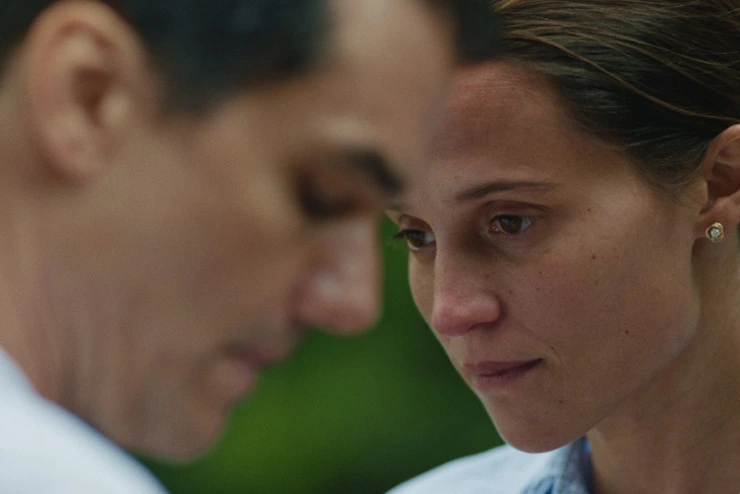
Motherhood is ‘the best thing…like nothing you’ve ever experienced’, so says my own mum. She loves that being a mum is a part of who she is, but it’s not the entirety of her identity. She’s also a wife, a sister, a friend, a boss and a pretty incredible human, aside from her title of ‘mum’. Yet, motherhood is not for everyone, nor does it mean the same thing to every woman. Its impact is complex and deeply personal. In Rachel Rose’s directorial feature-film debut, The Last Day, these nuances are captured through two parallel narratives that explore the impact of motherhood.
Drawing inspiration from Virginia Woolf’s 1925 novel Mrs Dalloway, The Last Day follows the parallel lives of Jules and Taylor in present-day New York, as their lives briefly intertwine over the course of one July 4th day. For differing reasons, Jules and Taylor both want to escape the four walls of motherhood, yet the film deeply embeds it in its fabric. It’s in the baby aisles in the grocery store and the drawings on Taylor’s fridge; in strangers’ baby bumps and Jules’ stepmom ordering lunch for them. It is impossible to avoid. Rose’s screenplay and Olivia Peebles’ production design embellish these women’s worlds with reminders of what and who they are: mothers. The inescapable, cold, hard truth.
Jules, played by Alicia Vikander, spends her day preparing for her annual 4th of July party. One minute she’s collecting a cake from the bakery, the next she’s getting Botox in the city and clearing out her dead father’s apartment. A chance encounter in the city with two people that haunt her past – a former lover and former publisher – leaves Jules unsettled and questioning everything.
The former lover, Peter (Wagner Moura), is a successful author, while Jules has not had a book published since before her daughter Evie was born. She confesses to Peter, and later to her former publisher, Ellen (Marin Ireland), that being a mother is what keeps her from writing. Her struggle with creativity becomes intertwined with the demands of motherhood, affecting her sense of fulfilment in life. Although this scene is fleeting, Peter’s significance is clear. He represents a life Jules might have led, both in a romantic sense with him and the writing career she longed for.
Meanwhile, Taylor, played by Victoria Pedretti, spends her day simply trying to stay afloat. Her Apple Pay doesn’t work when she orders coffee, and she arrives late to a mother and baby class. She struggles to manage her children while driving, then learns that her husband’s work has called him in. And then her baby starts crying. And won’t stop. Alone with a 6-month-old baby and two other children to care for, she becomes increasingly overwhelmed, and we come to understand that she suffers from postpartum depression.
Read more of our LFF 2026 coverage →
Vikander and Pedretti both bring a quiet vulnerability to their characters that makes them seem relatable, even if you aren’t a mother yourself. Vikander’s portrayal of Jules is glorious. She is at once a character who is reserved and timid, while expressing exasperation and bitterness. There are intricacies to Jules that I think even she can’t comprehend. Alongside her, Pedretti delivers a delicate, moving portrayal of a mother in the depths of it. A flashback to Taylor’s life before the baby adds to the depth of emotion and irony surrounding her present-day circumstance. It’s a poignant film with Vikander and Pedretti’s performances sitting at its heart.
The gender roles at play in this film are interesting. Jules’ husband is away with work, and he returns home just as the guests begin to arrive, leaving Jules to oversee all the party preparations. When work calls Taylor’s husband away, she must care for the children alone while in the pitfalls of depression. The two women must assume the role of mother, parent and carer, while grappling with their own issues. Jules is grieving her father while Taylor is grieving her life before postpartum depression. It’s a deeply authentic portrayal of the expectations of mothers that have long existed, and the duality of motherhood.
Being a mother has absorbed Jules’s entire being. When a friend asks what her summer plans are, Jules immediately tells them about Evie’s plans. The friend asks again: what are your plans? It’s a subtle but interesting example of how deeply embedded motherhood is in Jules’ existence. While Jules is absorbed by motherhood, Taylor is at a more extreme end of the spectrum. The shackles of motherhood have trapped her, with no clear way out. Both Taylor and Jules’s July 4th culminate in a firework display with irreversible repercussions.
The Last Day is a beautifully crafted adaptation and contemporary portrait of motherhood. If this is only Rose’s debut feature, then I look forward to seeing what she creates next.
★★★★
Playing at the 2026 BFI London Film Festival on October 8th & 9th / Alicia Vikander, Victoria Pedretti, Wagner Moura, Marin Ireland, Jihae / Dir: Rachel Rose / WestEnd Films

Discover more from
Subscribe to get the latest posts sent to your email.
About the Author


You must be logged in to post a comment.