Tatsuki Fujimoto 17-26 Review (Scotland Loves Anime 2025)

Typically, when it comes to adaptations, the most popular works rise to the top of the priority list. Dan Brown had already written three books before releasing The Da Vinci Code, but it was the success of that novel that ultimately led to its film adaptation. The same applies to Dragon Ball, which was not the late, great Akira Toriyama’s first adventure, and for Tatsuki Fujimoto, neither was Chainsaw Man. Rarely, however, do we look back at the origins of an author. Tatsuki Fujimoto 17-26 is an anomaly in this regard. A collection of eight shorts, it feels like a reflection of the past, a glimpse of what Fujimoto’s later work would become. It serves as a lens through which we can see an artist honing his style and voice in preparation for his pivotal works.
In Asian folklore, the red thread of fate suggests that an invisible cord connects those who are destined to meet. In Tatsuki Fujimoto 17-26, that thread becomes visible, weaving together ideas and themes that would later resurface in works like Chainsaw Man and Look Back. In A Couple Clucking Chickens Were Still Kickin’ in the Schoolyard, we see the early foundations of Fujimoto’s creature design and action sequences, elements he would later perfect in Chainsaw Man. Sisters explores how art functions as a form of communication for the artist, a theme Fujimoto later revisits in Look Back. Let’s not forget love and sexual desire, which appear in many of the shorts.
While they may be connecting threads to Fujimoto’s later work, each story feels narratively distinctive and thematically rich in its own right. Woke-Up-as-a-Girl Syndrome is a pro-trans love story that suggests even if we suddenly wake up in the “wrong” body, it does not define who we are. Being a man is not simply determined by whether one has a penis, but by what one identifies as. Sasaki Stopped a Bullet explores the idea that futures are not set in stone, and that even if there is only a 0.001% chance of something happening, it remains a possibility.
Not all of the shorts are equally gripping. Nayuta of the Prophecy taps into the fear of destiny and the ways in which we shape our own fate. It suggests that people are not born evil, nor destined to bring chaos. However, the short ultimately falls flat, as we are not given enough time to understand why Nayuta is not the mage with the power to destroy the world. Mermaid Rhapsody suffers from being generic and, in some respects, safe compared to the other shorts. While the gag of a harem of mermaids is amusing, it feels basic when set against the richness of what the other stories have to offer.
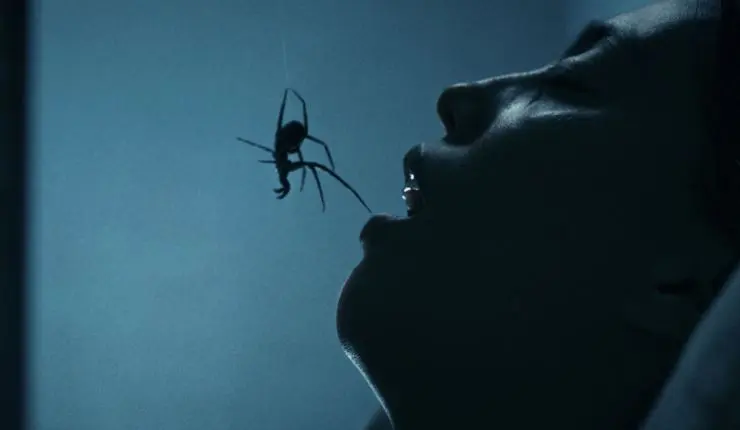
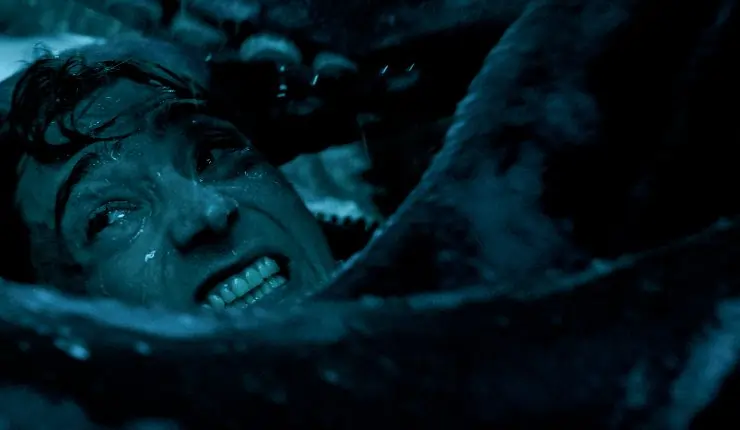
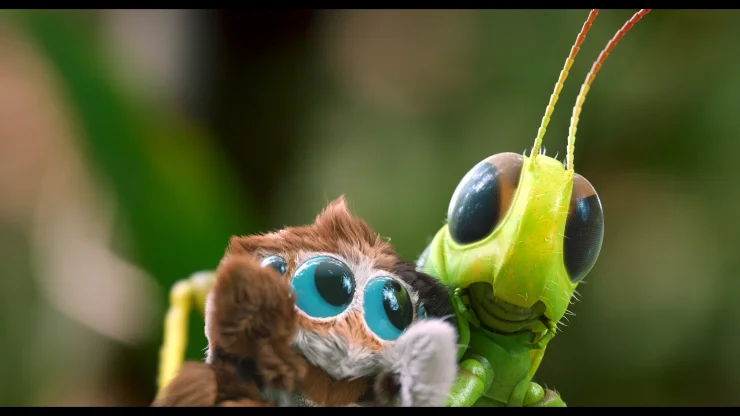
While these ideas have already been explored in the source material, adapting the shorts into animated form requires real skill. Six animation studios worked on the project, with two of them handling two episodes each. Each episode carries its own distinctive flair and visual identity. Love is Blind feels ripped straight out of Monogatari, with its blink and you miss it title cards, dynamic aspect ratio shifts, and moments that reduce the visuals to simple blocks of colour. Nayuta of the Prophecy, by contrast, feels closest to MAPPA’s rendition of Chainsaw Man season 1, with its dark, crime-tinged aesthetic, yet it also incorporates a striking level of realism into the unfolding fantasy.
Bringing life to still images is a skill in and of itself, but presenting eight unique and varied shorts that all unmistakably bear the mark of the same author is a true technical marvel worthy of praise. Even though the shorts vary in length, ranging from 12 to 22 minutes, there is so much care poured into every frame of the animation that it is difficult not to be captivated by what unfolds on screen. Animation studios Zexcs, Lapin Track, Studio Graph, 100studio, Studio Kafka, and P.A. Works, as well as the respective shorts directors, deserve immense praise for their dedication to bringing these stories to life.
Ultimately, the film’s biggest flaw lies in the number of grammatical mistakes in the subtitles. This may be localised to the version I watched and not necessarily applicable to the Amazon Prime release. It is distracting when simple words, such as girl, are spelt incorrectly. Instead of immersing yourself in the drama, you are forced to spend more time mentally decoding the subtitles than simply experiencing the art. When the shorts were released in Japanese cinemas, they were shown in two groups of four rather than all eight at once. Honestly, a break would have been beneficial, as consuming all eight in a single sitting was intense. However, this issue is negated when watching them on Prime.
While not all eight shorts are consistent in quality, Tatsuki Fujimoto 17-26 remains a fun collection that showcases the foundations of one of the most notable mangaka in recent memory. Filled with meaningful storytelling and wonderful animation, this anthology is well worth watching for any anime fan.
★★★1/2
Screened as part of Scotland Loves Anime 2025 and Available to stream on Amazon Prime / Kensho Ono, Shion Sakurai, Toshiki Kumagai, Chika Anzai, Shun Horie / Dir: Seishirou Nagaya, Nobukage Kimura, Nobuyuki Takeuchi, Naoya Ando, Tetsuaki / Prime Video / 18
Discover more from
Subscribe to get the latest posts sent to your email.
About the Author