Super Nature Review: Unique But Cursory Thoughts On The World
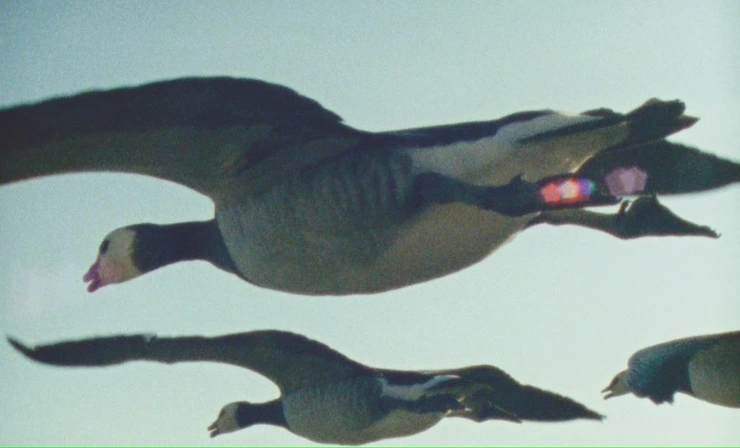
“Christian trains orphaned geese to follow him, so they can learn their migratory path,” recounts Tom, accompanied by his 13-year-old son Sacha, who is observing Christian’s work in Cantal, France. What follows is captured on a Super 8 camera: Christian flapping his arms as the geese follow and eventually take flight. Soon, they’re in the air, rendered in the nostalgic, grainy texture often associated with home movies. “He’s basically their mum.”
That sentimentality drives Ed Sayers’ Super Nature but also carries a melancholy undertone. The beautiful world Sayers has captured is at higher risk of becoming a memory. The film was shown at last year’s BFI London Film Festival. Made entirely of Super 8 footage, it spans 25 countries and offers insights from a host of participants, each providing a different perspective on humanity’s connection to and responsibility for nature. These encounters are fleeting yet fascinating, contributing to a collage of personality, empathy, and finally, urgency.
The director’s approach is intentionally intimate. He narrates the challenges of filming in this format, like the limited recording time for each shot. Against that backdrop, the visuals become more personal, as does Sayers’ deliberate approach. The film values its images while filmmakers around the world share their own personal experiences. One explains that using this camera brought him closer to his grandfather. Another’s hearing loss is mirrored in a sequence with muffled sound. These choices close the gap between Super Nature and its viewers, offering something much less detached than the conventional nature documentary.
At their best, image, sound and narration unify to produce something tender and poignant. But sometimes the symbolism is too pronounced. An ibex, solitary atop a mountain, is paired with a monologue about loneliness. Moments like this limit what an audience can discover. This is most potent when it trusts the imagery, which often carries enough explanation on its own.
Gradually, these stories intersect at a central idea of guardianship. Christian’s work with the geese clearly suggests the parental role most of these contributors assume. Others either discuss or showcase love for the animals and environments around them, rooting preservation in a vital emotional connection. The case for conservation has been made before, but the film’s intimacy removes the boundary between environmental responsibility and personal attachment.
Read more of our reviews here →
Alongside love and stewardship, loss remains a core theme in Super Nature. This is where the film’s format becomes most compelling. The softened, granular frames of the last two white rhinos on Earth (a mother and daughter) are easily mistaken for archive footage of a species already lost. This is repeated when the focus turns to the historic slaughter of bison, presented through imagery that initially looks historical, before being revealed as sombrely contemporary. As the lines between past and present blur, the design takes on a deeper purpose: to frame the natural world as something we may soon only be able to look back on.
Preservation is not an unfamiliar concept, but Sayers unlocks a new tone through affectionate imagery and diverse perspectives. Yet this originality has limits. These facets eventually begin to work against the film. Each story is brief, and whilst varied in origin, they return to the same overarching point. Before long, the film becomes structurally repetitive, and the sense of urgency it cultivated grows painfully distant.
Although it spends too long articulating what’s at stake, the film does return to its promised call to action. In Grenada, Zoya works to regenerate a reef beneath the sea, and Super 8 footage captures her underwater efforts. The heartwarming sequence guides the film toward an optimistic final note, demonstrating that loss is not inevitable. But even here, Sayers loses his grip on that momentum. His narration retreads what has been conveyed, and he continues to move rapidly between testimonies. The outcome is a surplus of encounters that, while compelling, rarely explore the depth that the film’s approach promises.
As a documentary, Super Nature is moving and visually distinctive. Super 8’s grain, warm tones and saturation reimagine the present as a dream-like memory, and the results are both captivating and melancholy. It works well when it trusts what it captures, but falters when the director overexplains and the pace is unduly rapid. The imagery, however, lingers. It conveys a message about our relationship with nature and why it is worth protecting, without the need to spell it out. Ultimately, its formal strengths and thematic weight make it timely, memorable and inspiring.
★★★

Discover more from
Subscribe to get the latest posts sent to your email.
About the Author



You must be logged in to post a comment.