Martial Law: Lo Wei’s Wuxia World Review (Eureka Entertainment)
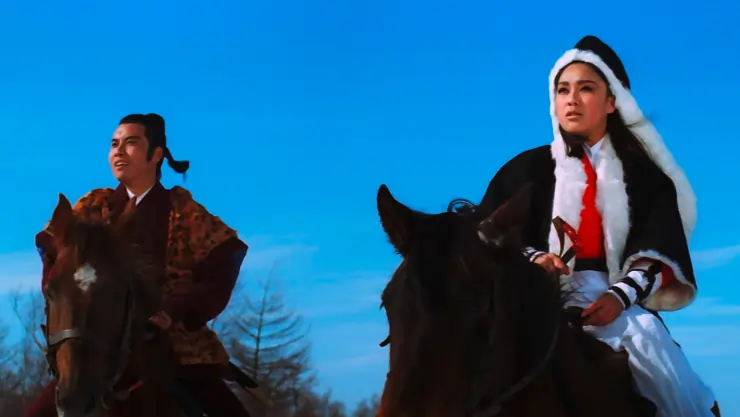
Lo Wei is a legendary Hong Kong director and actor; his work on The Big Boss and Fist of Fury is nothing short of transcendent, reshaping Hong Kong action cinema forever. Yet even before his collaborations with Bruce Lee, Lo Wei was already a master of the martial arts genre at Shaw Brothers. Three of his wuxia films from the late ’60s and early ’70s, The Black Butterfly, Death Valley, and Vengeance of a Snow Girl, have now made their way to Blu-ray as part of Eureka Entertainment’s Martial Law: Lo Wei’s Wuxia World release. Showcasing both the beauty of the wuxia subgenre and a vital cultural lineage that paved the way for the hard‑hitting martial arts cinema of the 1970s.
The Black Butterfly follows a thief of the same name who steals from the rich and gives to the poor. However, when a villainous group seeks revenge on the Black Butterfly, the thief must form alliances to take them down. While the narrative is simple at the beginning, the film becomes increasingly distinctive as it progresses, culminating in a final act that is nothing short of incredible. The fierce and thrilling climax still holds up over time and remains striking even 50-plus years later. I do wish the film were tighter in terms of pacing, as it takes a bit too long to find its footing, but it is worth it for the final 20 minutes.
Death Valley is different from The Black Butterfly. It tells the story of a woman who manipulates her lover and a swordsman into killing her uncle so she can claim his inheritance, then pits rivals against each other to cover her tracks. The film is a classic tale of revenge and drama. However, it attempts so many betrayals and double-crosses that I found it difficult to fully understand all of the characters’ motivations. It is the shortest film of the set, which means it has the best pacing, as every scene allows the narrative to flourish, but it still feels somewhat muddled in its execution.
Vengeance of a Snow Girl may be the biggest subversion of them all. It follows Shen, a swordswoman with a disability, as she seeks revenge on those who killed her parents and caused her condition. However, when she encounters one of the figures involved in the tragedy—who feels remorse and wants to make things right—he advises her that her disability can be cured. Breaking the mold of a traditional revenge tale, the film becomes something more complex and meaningful, but it is too long to fully deliver on its strong themes. While it could be argued that featuring a plotline about curing a disability is problematic, I feel that, for its time, and in how it is used to explore themes of forgiveness, the positives outweigh the negatives
All three films feature action that, for the time, is utterly world-class—from their creative and inventive use of wires and trampolines to their fun use of weapons, which leads to dynamic and interesting choreography. The Black Butterfly in particular, includes a few moments where the cinematography is genuinely incredible and unlike anything I have seen in a Lo Wei film before. They are still inherently products of their time, and it is easy for me to say that I prefer the action style that would come to dominate the late 1970s, into the ’80s and beyond. However, without these classics, we wouldn’t have films like The Big Boss or Drunken Master.
In addition, all of the films feature strong performances that allow audiences to become fully immersed in the worlds Lo Wei creates. All three films include recurring actors—such as Lisa Chiao Chiao, Elliot Ngok Wah, and Tien Feng—even Lo Wei himself appears in two of them. On top of that, even the likes of Sammo Hung have small roles early in their careers here. However, while you may recognise the faces, they never feel as though they are playing the same characters.
All three films look stunning. Despite being 1080p HD presentations, they appear remarkably crisp on my 4K LG C5 display, so crisp, in fact, that you could easily mistake them for 4K transfers. Even with their mono audio tracks, they still sound incredible for their era: the sound effects hit with real punch, and the score carries a rich, expressive flourish. On a technical level, these are exceptional discs in both picture and sound.
Where Martial Law: Lo Wei’s Wuxia World fall short is in its bonus features. Aside from a single interview with Hong Kong cinema scholar Wayne Wong on the life and work of Lo Wei, the set includes only three audio commentaries by action‑cinema experts Mike Leeder and Arne Venema. These are fun extras, but I can’t help wishing for more, behind‑the‑scenes footage, additional essays, or even new or archival interviews with cast and crew, whether in front of or behind the camera.
None of these films will redefine what you expect from martial arts cinema. However, as a historical snapshot of an important and legendary filmmaker, this is a must‑own set. Lo Wei redefined the genre, and the work featured here demonstrates why he was a leading figure in martial arts cinema — and how his films helped pave the way for the genre‑defining classics that followed. Martial Law: Lo Wei’s Wuxia World is essential for anyone who considers themselves a martial arts fan.
★★★★
Out Now on Blu-ray / Lisa Chiao Chiao, Elliot Ngok Wah, Tien Feng, Angela Yu Chien, Sammo Hung / Dir: Lo Wei / Eureka Entertainment / 15
Discover more from
Subscribe to get the latest posts sent to your email.
About the Author