La Bola Negra Review (2026 BFI London Film Festival)
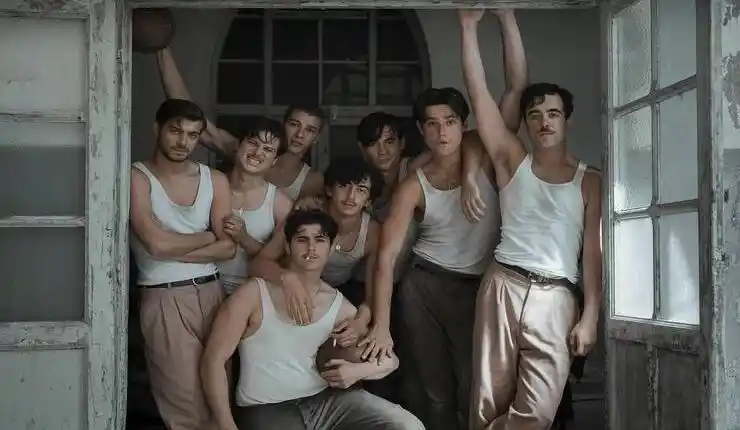
La bola negra (in English, The Black Ball) is a vast, dazzling triumph and astounding second feature from Spanish directors Javier Calvo and Javier Ambrossi, affectionately known as ‘Los Javis’. Spanning almost an entire century of Spanish history, La bola negra is an epic period drama intertwining the lives of three gay men inspired by an unfinished work of the same name by Federico García Lorca. Confident direction and impeccable casting, with an ensemble that includes Penélope Cruz and Glenn Close, ensure that La bola negra shines as one of the most beautiful and poignant films of the year.
In García Lorca’s text, a young man named Carlos applies for membership to a casino and is rejected by the method of a black ball – dramatically restaged in the film, board members vote using either a white or black ball to indicate approval or rejection – the origin of the term blackballing. Carlos is rejected due to suspicions that he is homosexual, but Lorca was assassinated in 1937 by Spanish Nationalist militia before he had the chance to finish the story. Using this as a stepping stone, Los Javis constructed a stunning triptych set across three timelines: 1932, preceding the outbreak of war; 1937, in the brutal midst of conflict; and 2017, where the trauma of past generations continues to haunt the narrative.
The film opens in 1937 with Sebastián (an extraordinary debut from popular Spanish musician Guitarricadelafuente), excited to play his trumpet for the arrival of the Italians, changing his tune when they instead bomb the town. Making a narrow escape, Sebastián is involuntarily recruited for the Nationalist militia, where he is tasked with guarding the captured soldier and real-life partner of García Lorca, Rafael Rodríguez Rapún (Miguel Bernardeau). Five years earlier, we meet Carlos (impressive newcomer Milo Quifes), whose timeline serves as a theatrical retelling of Lorca’s story, which Los Javis make the somewhat audacious decision to complete on his behalf.
In 2017, we follow Alberto (Carlos Gonzalez), a student and defeated playwright living in Madrid with his boyfriend whilst researching lost queer identities throughout history. Alberto learns his estranged grandfather has left him something in his will, adding extra tension to his relationship with his mother (Almodóvar regular Lola Dueñas), a woman with substance-abuse issues and inherited trauma of her own. The first cut to this timeline is so intentionally jarring it resulted in the man behind me guffawing, a word I don’t use lightly. Immediately, it is clear that this timeline will serve to keep the film grounded, a genius move of narrative balancing.
Read more of our LFF 2026 coverage →
The 1937 timeline is the heart of the film, and the scenes between Sebastián and Rafael are almost too compelling – I never wanted to leave them. Guitarricadelafuente imbues Sebastián with a profound sadness as he grapples with his desire, whilst the ridiculously handsome Bernardeau brings a formidable balance of vulnerability and strength to the imprisoned soldier. Penelope Cruz is electric as Nené Romero, a cabaret performer brought in to entertain the army. Whilst she faces trials of her own, Nené is bold and passionate, in stark contrast with our central male figures who remain unable to express themselves.
It is no wonder Calvo and Ambrossi were awarded the prize for Best Director in Cannes for their work on this film. La bola negra is visually outstanding, filled with glorious colours that transport us into the world of García Lorca. The pair’s theatrical background is evidenced by beautiful, thoughtful choreography; a standout scene where Carlos drowns out his thoughts at a bar is an intoxicating example of this. The screenplay is co-written by Los Javis with Alberto Conejero, whose play La piedra oscura served as inspiration for the 1937 storyline.
Considering its focus on the historical erasure of queer love, the film surprisingly doesn’t really confront the fascist ideologies themselves, but it doesn’t feel as though that was the intention. This is a perfect example of successful adaptation, bolstered by Raül Refree’s booming score and a stunning visual concoction shot on 35mm by cinematographer Gris Jordana.
This is a really special movie. A lyrical, moving experience, La bola negra highlights the inherent connection between performance and identity. The film is grand and sprawling, emphasising the destructive impact of these buried histories. La bola negra is going to break your heart, and I urge you to experience it in theatres.
★★★★★
Playing as part of the 2026 BFI London Film Festival on October 8th, 12th and 15th / Guitarricadelafuente, Miguel Bernardeau, Carlos González, Milo Quifes, Penélope Cruz, Glenn Close/ Dirs: Javier Ambrossi, Javier Calvo / Altitude / 15

Discover more from
Subscribe to get the latest posts sent to your email.
About the Author


You must be logged in to post a comment.