Film Review- Papi Chulo (2019)

Papi Chulo is a low key drama about the friendship between a thirtysomething TV weatherman and a middle-aged Mexican labourer in LA
Matt Bomer (TV’s White Collar and American Horror Story) plays Sean, a Los Angeles based TV weatherman who has an on-air meltdown whilst forecasting another day of hellish heat in LA. Ordered to take a mental health sabbatical by his boss (Wendi McLendon-Covey, who is given nothing to work with in this brief role), Sean finds himself with too much time on his hands in a now-empty home he formally shared with a departed boyfriend.
In his sabbatical boredom, Sean becomes hyper fixated on an unpainted spot of decking and hires at random a Mexican migrant labourer, Ernesto, to fix it. Sean speaks little Spanish and Ernest speaks minimal English, but it’s not the film you think it’s going to be.
Uncomfortably Sean tries to make Ernesto feel at ease, his own loneliness and heartbreak means he soon passes the employer/employee lines. By Ernesto’s second day of work he is being taken on hikes and on row-boating exclusions across the lake. Sean desperately needs someone to talk to, Ernesto’s lack of English only helps as Sean finally finds someone willing to listen. There is no doubt that Sean mistakes Ernesto’s silence wisdom, and it doesn’t feel too far away from the ‘magic negro’ trope from Hollywood days gone by.
Director and writer, Irishman, John Butler (The Stag and Handsome Devil) is aware of the exploitive relationship between the pair. Especially, when Sean starts projecting fantasies onto their interaction and Ernesto starts calling his wife for guidance regarding the “gringo” who is paying for him to act as a friend and, he fears, possibly more. Strangers make references to Driving Miss Daisy and it’s easy to see echoes of the Morgan Freeman film in Papi Chulo.
Bomer is excellent as Sean, portraying a naked vulnerability and loneliness that many viewers will connect to. His Ken doll looks against the perfect Los Angeles sun only helps emphasise his emptiness. The sitcom-style slapstick feels beyond Bomer’s range, the nervous online hookup and chaotic DIY skills are just awkward to watch with few laughs to be had. Patiño, gets very little to do, his character’s role in the film is to look silent and endure whatever his employer throws his way with nothing from his point of view. The only context we get about Ernesto’s life are brief, subtitled, phone calls between him and his wife. What little we do see feels distant, under baked and feel cliché.
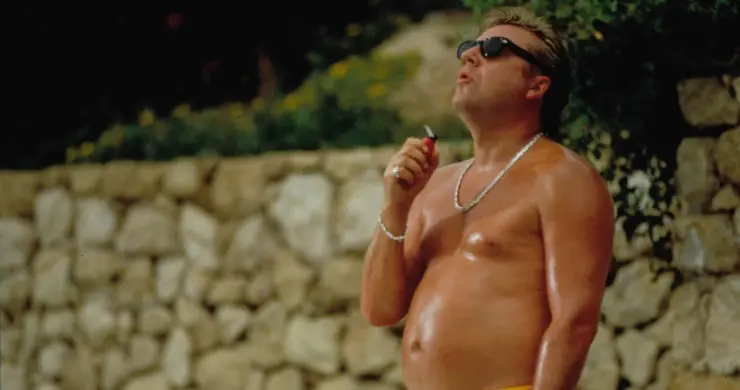
The problem is too much of this script and performance is unsaid, leading audiences to bring their own opinions to the film. We don’t know why Sean picks Ernesto, the first glimpse we see of the worker is hardly flattering as he lifts his shirt to wipe his face and unveils a pot belly. No matter how you describe it, there is something unsettling about watching Sean coax Ernesto into his Prius and something even more unsettling when he pays the Mexican man extra for going as his plus one to a party.
The script’s self-awareness is limited, the involvement of a Latino creative could have done this film wonders. The jokes at Sean’s expense don’t quite make up for the character’s cultural insensitivities. At times it’s hard to sympathise with Sean when he disregards Ernesto’s boundaries, forces his own romantic ideologies on the straight man and even invades Ernesto’s home.
Butler had the opportunity to examine social, racial and income equalities between the two men but sadly wastes the opportunity. Sean, in a low point of his depression, seeks Ernesto in his Latino-heavy suburb and makes an embarrassment of himself, yet his behaviour is never called out. It’s heavily hinted that Ernesto reminds Sean of his former partner, but it fails to explore deeply enough why Sean has latched onto his partner’s Latino identity and not any other parts of him. Papi Chulo, despite the title which originally meant pimp but has now become slang for an attractive Latino male, fails to explore anything about the fetishism of Latin culture by Americans who still fail to see migrants as anything more than handymen.
Papi Chulo works as a drama about loneliness and the desperate need for your feelings to be heard but not judged. As a comedy, it entirely fails, not helped by Bomer’s awkwardness during the more slapstick-orientated scenes. There is little humour in a white man teaching a poor migrant who can barely speak English about overpriced health drinks and taking him to parties where he is unknowingly judged by Sean’s wealthy friends. There is something cruel in the jokes about Ernesto’s language barrier, he can’t defend himself or tell Sean that he’s feeling uncomfortable.
There are multiple points in the film where you feel like you know where it’s going, but it never caves into the predictable. It avoids the clichés of a cross-cultural pairing and those of a relationship between a middle-class white man and a migrant dayworker. In the last act, Papi Chulo sneaks up on you and punches you in the gut with an emotional climax that makes you reassess your opinion of the whole film.
Although a touching portrayal of mental health and loneliness it is another story of a white man whose life is improved by gaining a wise non-white friend. It’s a shame the filmmakers aren’t as concerned about Ernesto’s story in this one-sided friendship that just about skirts around insensitivity. Saved by an emotional ending, Papi Chulo will connect with the lonely but perhaps not the community it fails to give credit to.
[rating=3]
Papi Chulo will be available on Digital Download from July 22
Discover more from
Subscribe to get the latest posts sent to your email.
About the Author