Elephants in the Fog Review (2026 BFI London Film Festival)
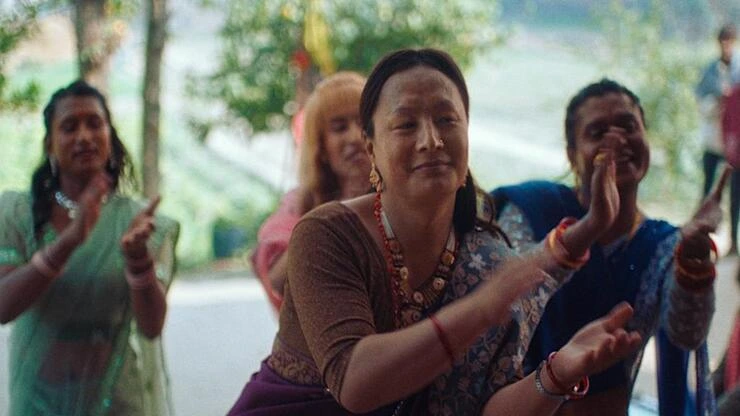
In Elephants in the Fog, Nepalese filmmaker Abinash Bikram Shah explores the tensions between personal freedom, family responsibilities and social prejudice through the lives of a Kinnar community in a remote village. At its centre is Pirati (Pushpa Thing Lama), the community’s matriarch, who dreams of leaving everything behind to build a life with the man she loves. However, when her adopted daughter Apsara (Aliz Ghimire) disappears, Pirati must confront the consequences of her own choices while searching for answers. Winner of the Un Certain Regard Jury Prize at Cannes, Shah’s feature debut is an atmospheric social thriller that finds its greatest strength in the contradictions of its characters and the humanity with which it portrays them.
There is so much pain, silence and humanity in the way this story unfolds. Rather than relying on conventional thriller mechanics, Shah allows tension to build through uneasy silences, strained relationships and the uncertainty surrounding Apsara’s disappearance. The investigation gradually exposes the prejudices that shape the community’s relationship with the outside world, while revealing that its own internal rules can be equally restrictive. Moments of genuine sisterhood sit alongside scenes of sheer frustration, as the characters’ moral codes become increasingly difficult to understand, let alone accept. Yet this complexity is precisely what makes their struggles so affecting.
At the heart of the film is a delicate balance between motherhood and independence, responsibility and freedom. Pirati’s desire to pursue a life of her own is entirely understandable, but her position as a maternal figure makes the prospect of leaving far more complicated. Her journey is shaped by guilt as much as love, forcing her to reconsider what it means to care for someone and what she owes to the family she has built. Pushpa Thing Lama delivers a mesmerising lead performance, nuanced and fiercely primal in equal measure. There is a remarkable naturalism to her portrayal, as though we are witnessing a person rather than watching an actor inhabit a character. The supporting cast contributes to this lived-in quality, grounding the film’s more heightened moments in recognisable human behaviour.
Read more of our LFF 2026 coverage →
Shah’s approach to the setting is equally effective. The fog, the forest and the surrounding landscapes become integral to the film’s emotional language, creating a world that feels beautiful and unsettling in equal measure. The superb sound design is particularly striking: the sounds of the forest carry an almost tangible presence, while the deliberate use of silence gives even the quietest moments considerable weight. Frédéric Alvarez’s score complements this atmosphere without overwhelming it, deepening the emotional tension rather than dictating how the audience should feel. The ceremonies, too, are filmed with a sensitivity to their physicality and collective significance, offering glimpses of a community whose traditions can provide both connection and constraint.
It is, however, the final scene that brings the film’s central ideas into particularly powerful focus. The elephants, initially presented as a threat that the villagers must keep at bay, become an evocative parallel for the Kinnar community itself. Both exist in an uneasy relationship with the surrounding society, tolerated under certain conditions but treated as a threat when they cross the boundaries imposed upon them. As the elephants emerge from the fog, the image challenges the separation between those who are permitted to belong and those expected to remain on the margins. The symbolism is all the more affecting because it does not offer an easy resolution: the boundaries may be breached, but the prejudices that created them do not simply disappear.
Elephants in the Fog is an emotional, layered and deeply affecting portrait of people searching for dignity, freedom and a place to call home. Shah approaches his characters with considerable respect, allowing their flaws and contradictions to coexist with their tenderness. Its atmosphere lingers long after the final scene, but it is the film’s understanding of belonging – and the painful cost of being denied it – that ultimately leaves the strongest impression.
★★★
Playing as part of the 2026 BFI London Film Festival on October 17 and 18 / Pushpa Thing Lama, Sahab Din Maya, Jasmin Bishwokarma / Dir: Abinash Bikram Shah / MetFilm Distribution

Discover more from
Subscribe to get the latest posts sent to your email.
About the Author



You must be logged in to post a comment.