Colours of Time Review
There’s something quietly audacious about how Colours of Time begins. We’re immediately met with close-up images of Monet’s paintings inside the Musée de l’Orangerie, washed over with classical music. It’s a striking opening that leans fully into high art, and it sets the tone for a film that is deeply concerned with how we see, remember, and interpret the past. It’s a bold choice, but one that pays off, framing the story not just as a family drama but as something more reflective and expansive.
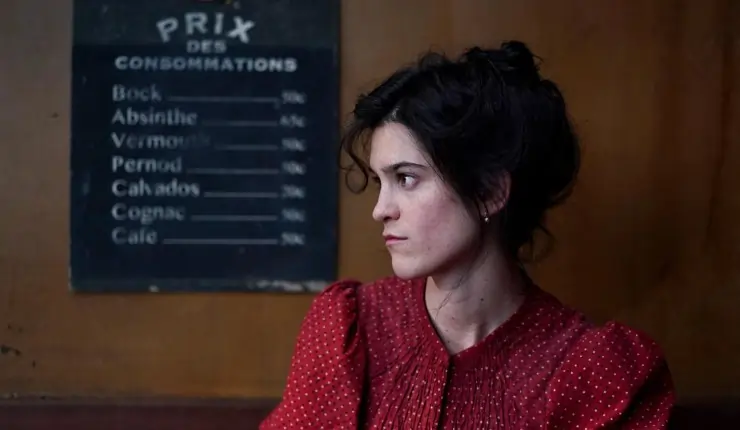
Directed by Cédric Klapisch, the film moves between two timelines, following four modern-day cousins who inherit a long-abandoned house in Normandy and find themselves drawn into the story of their ancestor Adèle. In 1895, Adèle leaves her rural home for Paris in search of her mother, stepping into a city on the brink of artistic and technological transformation. As her descendants retrace her journey in 2024, the film carefully interweaves both timelines, allowing them to mirror and challenge one another in unexpectedly emotional ways.
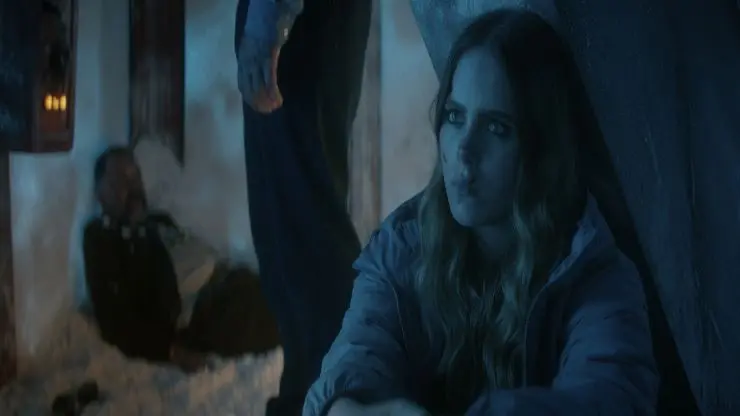
What’s most compelling here is how seamlessly Klapisch blends these two eras. Rather than treating the past as distant or romanticised, he presents it as immediate and lived-in. The 1895 sequences feel textured and tactile, full of movement and curiosity, capturing a Paris alive with invention, from the early days of photography to the emergence of Impressionism. In contrast, the present day carries a more clinical, digital sharpness, subtly reinforcing the film’s interest in how modern life shapes our perception of reality.
At its core, Colours of Time is about connection. Not just between people, but between generations, ideas, and ways of seeing the world. The cousins begin as strangers, tentatively orbiting one another, but as they uncover Adèle’s story, their own perspectives begin to shift. The film gently explores what it means to belong to a family, particularly one you don’t fully understand, and how looking backwards can often be the only way to move forwards.
Suzanne Lindon brings a quiet determination to Adèle, grounding the historical storyline with a sense of emotional clarity. Her journey feels both intimate and expansive, capturing the uncertainty of stepping into the unknown while holding onto a deeply personal sense of purpose. Alongside her, the ensemble cast in the present day brings warmth and humour, ensuring the film never becomes overly heavy despite its reflective themes. There’s also a playful undercurrent running throughout, particularly in how the film contrasts past and present attitudes. Moments of subtle comedy emerge from these juxtapositions, whether it’s the cousins grappling with their own assumptions or the film’s gentle critique of modern habits, especially our obsession with documenting everything without truly seeing it.
Visually, the film is undeniably rich. Inspired by Impressionist painting and early photography, it leans into colour and texture in a way that feels purposeful rather than ornamental. Every frame seems to echo the film’s central question: how do we capture a moment, and what do we lose in the process? If the narrative occasionally feels a little crowded, balancing multiple characters and timelines, it’s ultimately held together by its thematic clarity. Klapisch isn’t just telling a story about a family, but about time itself and the way it reshapes meaning. The film never suggests that the past was better or the present is worse; instead sitting comfortably in the tension between the two.
Colours of Time is a thoughtful, crowd-pleasing blend of historical drama and contemporary reflection, anchored by a genuine curiosity about art, memory, and human connection. It’s a film that invites you to slow down, to look more closely, and to consider what it really means to inherit a story.
★★★
In UK cinemas from 17th April / Suzanne Lindon, Abraham Wapler, Julia Piaton, Zinedine Soualem / Dir: Cédric Klapisch / StudioCanal UK / 15
Discover more from
Subscribe to get the latest posts sent to your email.
About the Author