Colony Review: Yeon Sang-ho Returns With Another Intense Survival Thriller
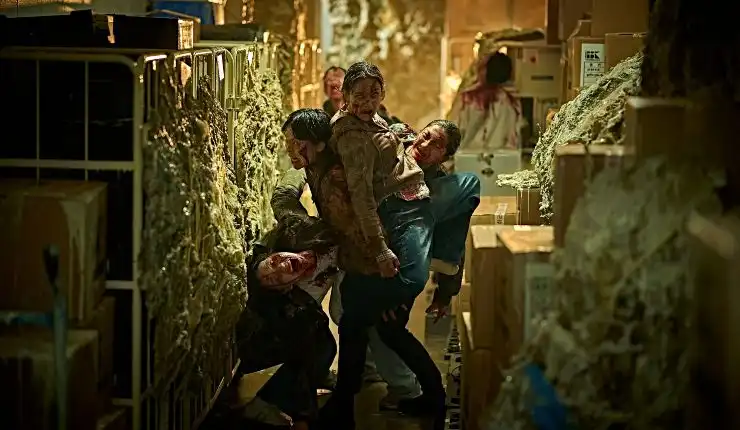
Just remember the word ‘colony’ and director Yeon Sang-ho’s latest horror thriller, Colony, might make all the more sense in the long run. After the cult horror sensation that was his 2016 film Train to Busan, Sang-ho is back with another apocalyptic zombie genre film. Ten years after his successful high-speed thriller, Colony is now more modernised. Reflecting upon what the current state of the world’s social anxieties and fears expand upon. Whether or not it works for the film’s overall experience, it is clear that technology and superficial thinking come into play, both in the world we live in and in the world created in this film.
A horrible end to an informative biotech conference. A new way for the zombie movie to be made, not through an infection, but through an outbreak of a mutation. Forget a high-speed bullet train, try a towering high-rise building instead. Changing such subtleties in what audiences are familiar with, but keeping the horrifying elements within, brings something itchingly new to the big screen.
Looking for potential job positions, Professor Kwon Se-jeong (Gianna Jun) attends a biotech conference in a downtown Seoul skyscraper. Quickly after the conference ends, Se-jeong witnesses what unknowingly will become the beginning of a mass outbreak of a rapidly mutating virus. Bringing the violence to the building, an apparent evil mastermind, Seo Young-chul (Koo Kyo-hwan). With no knowledge of either what the virus is or how to cure it, the government takes things into its own hands and seals off the building, trapping everyone inside.
First introducing Se-jeong to the CEO of the biotech company, DDrKang Woo-cheol (Kim Jong-tae) and ex-husband Han Kyu-seong (Go Soo) also find themselves trapped inside. Amongst Se-jeong and Kyu-seong are several desperate and unlucky citizens, apart from Officer Lee Bong-seok (Lee Joong-ok). It becomes an obvious fight for survival as characters are introduced as either potentially selfless or completely selfish from the beginning.
At least Sang-ho brings his audience into the plot quite quickly. From the beginning, it becomes clear he is setting up the future for the fil, by explaining early on, however subtly, just what this virus could be. Though it requires specific attention to detail and science in this case, as the storyline unfolds in front of the viewer’s eyes, it is quite intriguing just what you would have known had you recognised it from the conference at the beginning of the film. Referring to tests completed by the company earlier on, as well as the sync movements of ants, CEO Woo-cheol implements all the hints required in the first moments of the film. Leading the viewer down the same path as the citizens, professors and officials who become trapped in this life-or-death situation.
Read more of our reviews here →
The motions of the zombie-fied citizens also add to the elements of the genre. Giving them such a unique and grotesque movement style, the viewer cannot help but be creeped out as they crawl, crackle and stumble around the sky rise. Almost as if mannequin-like, each time the zombie finds a new angle to attack from, they roll reverse on themselves. In a moment of mind transfer, all zombies act in unison, looking up to the sky almost in the action of a seizure standing up. A graphic and gruesome idea trapped amidst the elements in a high-rise multi-venue building, a strange premise which works well in some regards, and falls slightly flat in others.
The film’s pacing is where its issues lie, with some scenes lasting longer than necessary. You want the plot to continue to drive forward, but instead you are stuck in the same room with the same issue. Of course, characters need to be slow in discovering the solutions for problems they face — such as how to cure the disease, even if there is one. However, there are quicker ways to give characters the chance to discover what they need to move into the next stage of their potential escape. These tedious characters make it a bit easier for the audience to stay ahead of the film. They give the viewer the chance to guess what will happen next, which might, for some, give them the sense of smarts.
His creation of this new plague, distributed as if an ant colony, allows Sang-ho to create something different for the genre completely. Yet even so, audiences are used to the typical tropes, and the variety of characters portrays them greatly. Though it can feel repetitive and overused, by the end, you are given the chance to understand that there is only so much one can do with a zombie film. And in changing how the virus was created, mutated and evolved, Sang-ho is already one step ahead. Unfortunately for his characters, some might find it much harder.
But when left to crack the case, per se, Professor Se-jeong gives herself the final say. In Jun’s performance here, this is where the audience feels the power. She controls the screen not only physically through her characters’ actions, but in her persona as well. Truly put to the test along the way, she obviously continues to question the motives behind everyone involved. Becoming an empowering icon, she will stop at nothing to help as many people sas he can help survive. Not only does she become a trope for the film, but a modern-day imagination of who the hero can be.
Adding another element of how Sang-ho brings back the recognisable elements from Train to Busan but into the 2020s. It is all about the tension created through the characters, pacing, sound and especially the costumes and movements.
★★★
Continue Reading
Discover more reviews selected by the editors at The People’s Movies.
› Hope Review
› Evil Dead Burn Review
› The End of Oak Street Review
In UK cinemas on August 28th / Jun Ji-hyun, Koo Kyo-hwan, Ji Chang-wook, Kim Shin-rok, Shin Hyun-been, Go Soo / Dir: Yeon Sang-ho / StudioCanal UK / 15

Discover more from
Subscribe to get the latest posts sent to your email.
About the Author


You must be logged in to post a comment.