Case 137 Review (EIFF 2025)

Police accountability has become a prominent theme in police procedurals. While these ideas were explored thematically before George Floyd’s death, since that tragic event, film and TV have shifted away from promoting “cop-aganda”. Chicago P.D. moved away from Hank Voight and his team, from torturing and bending the law to understanding the importance of accountability and adhering to proper procedures. Case 137 examines this accountability through the perspective of an internal affairs unit investigating an incident where a young man is seriously injured after being shot in the head by an LBD shot.
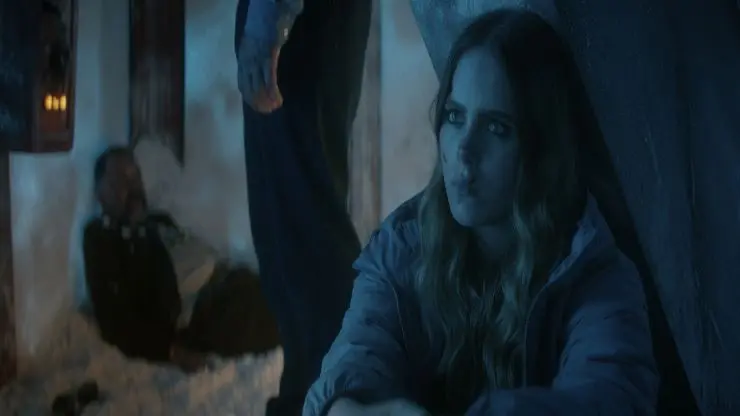
Centred on the case’s lead, Stéphanie (performed brilliantly by Léa Drucker) is an overworked officer handling over 40 cases before taking on this particular one. The increase in cases and the core event explored in the film relate to the yellow vest protests that took place over the weekend. The goals of the yellow vests are not elaborated upon, but to provide context, they protested for higher minimum wages, improved living standards, and greater government transparency and accountability. Watching the testimonies of the protestors unfold is utterly harrowing. We see a family walking through the streets of Paris, which is teeming with police officers on duty.
However, what begins as a family exercising their civil right to protest, believing they are doing good for France, quickly descends into chaos as police treat the protesters as if they were terrorists seeking to overthrow the republic. These horrors serve as the entry point for Case 137 and its central themes. Internal Affairs is a department that, in theory, should be holding the police to account. They are supposed to help balance the system, root out corrupt officers, and prosecute unjustifiable and illegal actions, thereby fostering a healthier relationship between the police and the public and must investigate an incident where a young man is seriously injured after being shot on the head by an LBD shot.
In reality, Infernal Affairs is seen as a threat that seeks to punish honest cops who have thankless jobs; we even see Noelie (the new partner of Stéphanie’s ex), a union member who criticises Stéphanie for investigating colleagues rather than criminals, as her inquiries tarnish the reputation of the entire force. However, they also fail to serve the public; when Stéphanie is speaking to a potential witness, she is asked if the injured person was Black or Arab, would she care as much, and how many police officers have been dismissed due to inquiries, which is zero. This thematic idea is explored throughout the first half of Case 137 and is engaging, but it is somewhat superficially presented as it is completely dropped in the second half.
As the investigation progresses and more evidence is uncovered, it becomes clearer that this is a case of police brutality. The film shifts focus from dissatisfaction with internal affairs to how the system is designed to shield the police from accountability. Internal Affairs appears more as a form of systemic theatrics to seem self-critical, while police unions and senior officials protect and cover for corrupt officers. At the same time, this could thematically link to the first half, as the cycle of negative reputation emerges both from the force itself and public resentment is driven by the system safeguarding bad cops.
However, these ideas do not seamlessly connect to form a complete and compelling narrative. This may be due to director Dominik Moll’s straightforward approach, which resembles high-quality French TV series like Astrid or Spiral rather than a vividly cinematic film. As the credits rolled, nothing appeared visually impressive or engaging, and even within the narrative, Moll barely touches on complex issues like the strength of police unions (which seems like a way to avoid potentially controversial anti-union points). This is ultimately disappointing because Case 137 has a strong core message, and its lack of remarkable visuals and more simplistic approach to systemic issues impacts an otherwise strong narrative.
What remains consistent between both halves of the film is the strength of the acting. As discussed, Léa Drucker is truly brilliant, portraying Stéphanie, who believes she is doing good for the system. However, as the investigation progresses, her worldview is gradually shattered before her eyes. The rest of the cast are also excellent but are not as well defined or explored as our lead, serving more as vehicles to explore the film’s core themes.
Narratively and thematically strong, Case 137 lacks a strong presentation and raises tough questions about systemic issues. It could have been an incredible film, but instead, it remains a solid French crime thriller — gripping from start to finish and driven by truly incredible performances.
★★★ 1/2
Playing as part of the Edinburgh International Film Festival on the 15th, 16th, 19th and 20th August / Léa Drucker, Guslagie Malanda, Yoann Blanc, Jonathan Turnbull, Mathilde Roehrich / Dir: Dominik Moll / 15
Discover more from
Subscribe to get the latest posts sent to your email.
About the Author