Lee Cronin’s The Mummy Review
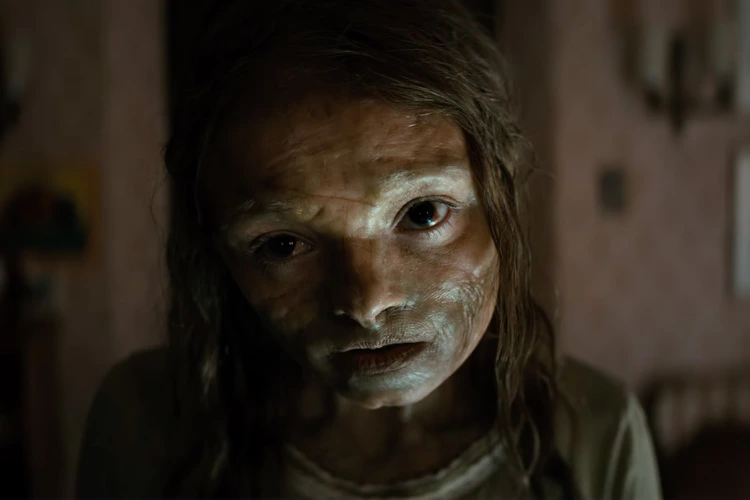
Lee Cronin’s The Mummy is a supernatural horror film and is a re-imagining of The Mummy franchise by Blumhouse, which began in 1932 with Karl Freund’s The Mummy, which starred Boris Karloff as the titular monster as part of Universal Classics, through Stephen Sommers’ take up the Mummy mantle with his series, which involved two sequels and an upcoming fourth film, as well as Tom Cruise-starring short-lived Dark Universe world version.
The latest rendition – and it is very much a “rendition” – stars Jack Reynor and Laia Costa, who play parents to a young Katie (Natalie Grace as the older version and Emily Mitchell as the younger), who are devastated when their daughter is stolen in Cairo. Their hopes are reignited eight years on when Katie is found in an ancient sarcophagus following a mysterious plane crash; however, the couple are horrified to discover Katie holds some nightmarish characteristics.
Cronin’s work follows in the wake of a revival of Universal Classics and Hammer Horror monster films, all of which carry a social-political undertone. For example, Leigh Whannell’s The Invisible Man took H.G Wells’ original sci-fi novel about an experiment gone wrong and morphed it into a metaphor for abuse in 2020. He then remade the 1941 original horror, The Wolfman, into a representation of losing a loved one to an illness or addiction through a prolonged transformation from man to wolf.
Guillermo Del Toro’s Frankenstein reads as a metaphor for science, religion, and paternal bonds (as faithful to Mary Shelley’s original intellectual prose), and while not a direct Universal Monster remake, even Robert Eggers’s Nosferatu revamp held debated undertones of sexual exploitation and victims regaining agency. So, which socio-political undertones has Cronin taken The Mummy to?
This latest rendition of the Universal monster possesses a plot outline and key sequence which signal deeply to grooming and child abuse, coming across as a horror allegory for how such an experience embeds itself into and works to destroy a family. The Egyptian curse, living as a threat within the film, embodies the curse of child grooming and exploitation in its hereditary code of targeting a young, unsuspecting child, earning her trust and then committing a mass violation which goes on to infect their family. Cronin’s writing signals this concept immediately upon meeting Katie, with subsequent dialogue calls and Katie’s overall transformation upon returning to her family magnifying the thematic material.
As a result, Lee Cronin’s The Mummy offers a harrowing underbelly of a heartbreaking display of parents losing a child in more ways than one. The film holds some deeply upsetting and distressing scenes and imagery of the central couple crumbling under the harsh reality that their daughter has changed in horrific ways, contrasted with a resilient fight for her.
This conceptual weight is complemented by some classic horror scares and shocks, with Cronin incorporating some great, intense moments of suspense for clearly incoming gore, yet the payoff viewers are made to scream for to happen defies their initial expectations made from scene set-ups. As relating to the aforementioned social topic, Lee Cronin’s The Mummy centres itself with body horror in the traditional mode of intense violation of the body, done to Katie, which she then does unto those around her, making for some stomach-churning imagery.
A well-chosen compilation of various camera shots and fast-paced editing done by cinematographer David Garbett and editor Bryan Shaw makes sure the guts and gore are amplified on screen, so audiences are fully immersed with the family. Another highlight was Katie’s physical transformation as part of her new status as a cursed mummy, amplified by some brilliant make-up and prosthetics led by team leader Ruairi Butler and Liz Byrne, which comes across as horrible to see a child be made into. Brian Doherty leads a team that delivers some terrific special effects to elevate the darkness which is swallowing Katie and her family whole.
Additionally, the film maintains its momentum thanks to some fantastic performances by Reynor and Costa, who deliver the agony and horror of the situation with ease. We can feel the couple becoming undone once Katie returns and demonstrates something vastly wrong with her, as a representative of how some couples crumble under the reality of what the film can be read as embodying. Also, May Calamawy offers power in a strong-willed, intelligent and quick-working performance as a detective keen on helping the family.
Of course, Lee Cronin’s The Mummy doesn’t surprise audiences with the tried and true, slightly overused horror cliches of the protagonist seeking help and lore explanation by an expert in an academic field. However, an evenly distributed emotional thematic weight and entertaining body horror make for a cinema experience you won’t want to miss out on.
★★★★
In cinemas April 17th/ Starring Jack Reynor, Laia Costa, May Calamawy, Natalie Grace, Verónica Falcón/ Dir. Lee Cronin / Warner Bros. Pictures / 18
Discover more from
Subscribe to get the latest posts sent to your email.
About the Author