Cottontail Review
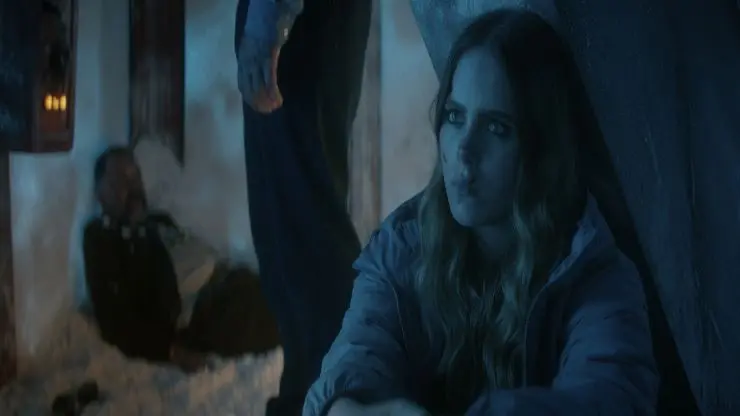
It’s almost too easy to assume that English and Japanese culture have next to nothing in common. It made fertile ground for Kazuo Ishiguro in The Remains Of The Day (1989) – the Booker Prize winning novel and the much-nominated film – allowing him to dispel that assumption once and for all. Some of that ground is re-trodden in Patrick Dickinson’s debut feature, Cottontail, a film that delicately combines the familiar with the fresh in a story about memory and forgiveness.
Kenzaburo (Shoplifters’ Lily Franky) lives by himself in Tokyo. Detached from the crowded, anonymous city around him, he’s also at a distance from his family. He’s recovering from the death of his wife, while he and his son Toshi (Ryo Nishikido) have become estranged. Forced back into each other’s company because of the ceremony to mark her passing, they’re given a letter she wrote long before her death, asking them to scatter her ashes at a place she loved when she was a child – Lake Windermere in England. The two men, along with Toshi’s wife and little girl, make the trip from Tokyo to the Lake District to fulfil her wish, but the tension between father and son puts the entire journey in jeopardy.
A deeply personal thread runs through the film. Dickinson, who both directed and wrote the film, based it on his own personal experiences, the inspiration for his short film Mr Rabbit (2013). Cottontail expands it into 90 minutes so that what started as an examination of his own mother’s death develops into something more complete, retaining her sad demise but also delving into the strained relationship between the husband and son she leaves behind and how her last request helps to re-build the bond between them, something both men believed to be shattered beyond hope.
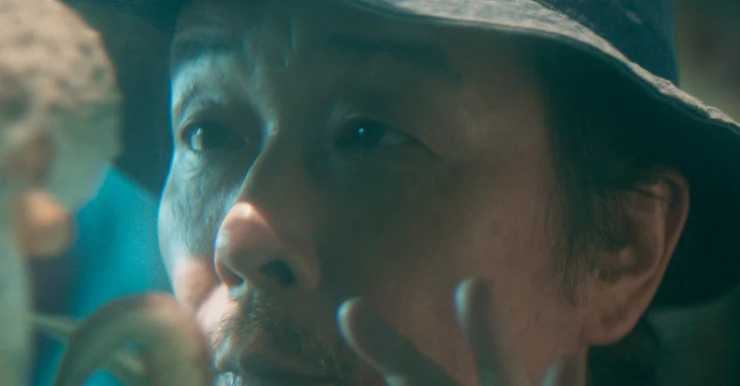
Fulfilling a last request isn’t new territory, but the film approaches it with a subtle eloquence, taking us back to the first meetings between Kenzaburo and his future wife, Akiko (Tae Kimura), to his denial in the face of her medical diagnosis and the strain of caring for her in her final years. Seen very much from his perspective, we see how he develops from an infatuated young man, to trying to avoid reality and his eventual devotion in looking after her. Perceptive, detailed close-ups, especially of the character’s faces, speak volumes and, coupled with beautifully composed western landscapes swathed in eastern mists, the film is a gracefully understated visual treat.
Feelings run deep and are buried even deeper, especially when it comes to father and son. On his travels, Kenzaburo finds a kindred spirit in a farmer (Ciaran Hinds), whose wife died several years previously but who, despite a faltering language barrier, opens up about his own feelings of loss. It feels like a conversation he’s been waiting to have and, for the elderly Japanese, it’s the first push against a door he’s kept firmly closed. Past and present are irrevocably linked together in a film that explores profound issues with an unexpected lightness of touch, but one that still manages to tender and compassionate. And that’s quite an achievement.
★★★1/2
In UK cinemas from 14 February / Lily Franky, Ryo Nishikido, Ciaran Hinds, Aoife Hinds, Tae Kimuro / Dir: Patrick Dickinson / Day For Night / 12A
Discover more from
Subscribe to get the latest posts sent to your email.
About the Author